

Why Your Practice Needs a Credentialing Turnaround Strategy
Provider credentialing is one of the most critical yet often underestimated processes in a medical practice. While it may seem like a back-office administrative task, delays in credentialing and payor enrollment directly affect a practice’s ability to get paid. New providers may be seeing patients every day, but without completed enrollment, those services often generate no reimbursable revenue.
Understanding Provider Credentialing and Enrollment

Why Credentialing Delays Are So Common

The Hidden Revenue Impact of Credentialing Delays
- Claims are denied or rejected
- Services are written off or billed to self-pay
- Cash flow becomes unpredictable
- Billing teams spend more time reworking claims
| Credentialing Issue | Financial Impact |
|---|---|
|
Delayed payor enrollment |
Providers see patients but cannot bill |
|
Incomplete credentialing files |
Claim denials and rejections |
|
Missed enrollment deadlines |
Lost revenue opportunities |
|
Manual follow-up processes |
Increased administrative costs |
|
Lack of credentialing visibility |
Poor financial forecasting |
Payor Onboarding Challenges That Slow Everything Down
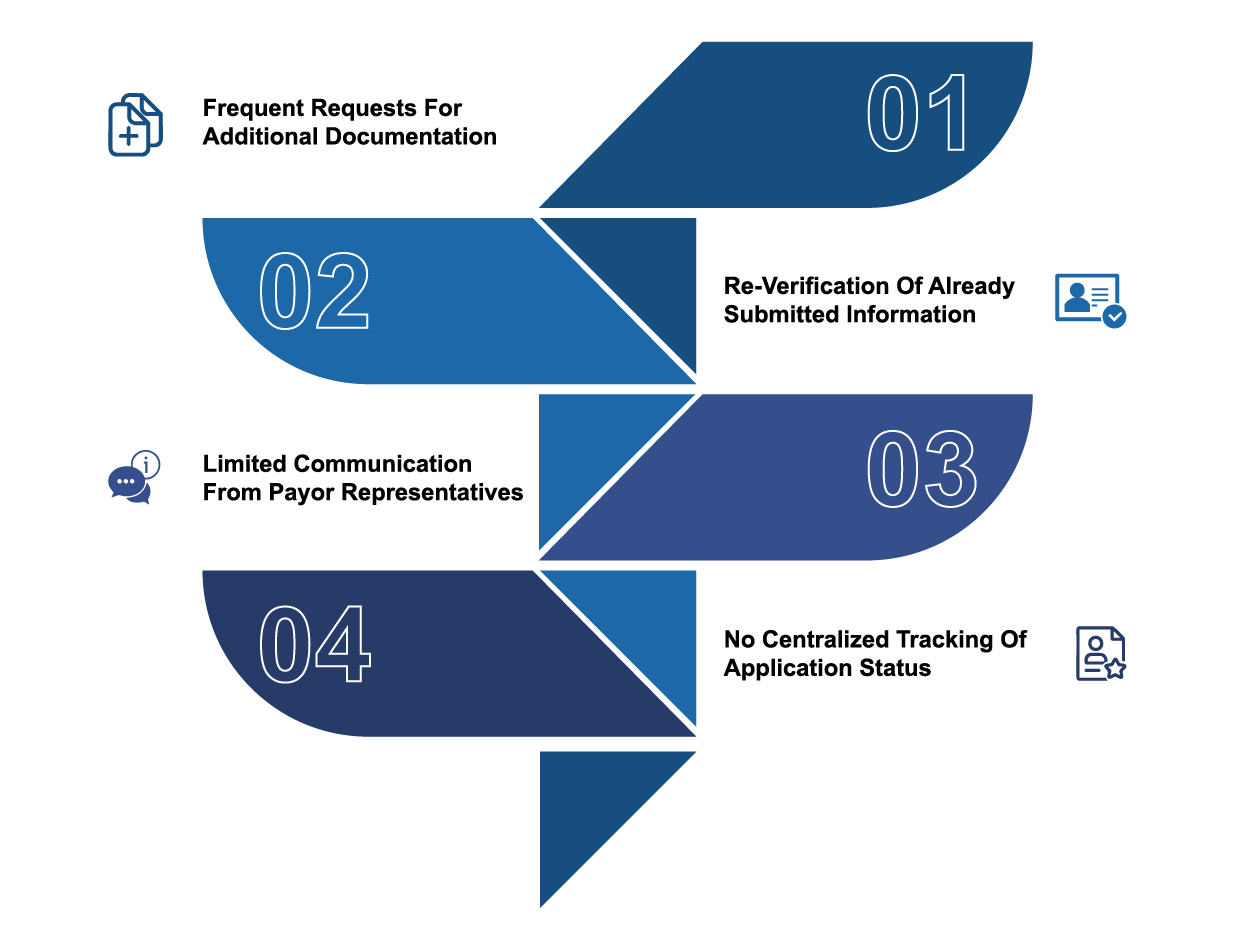
- Frequent requests for additional documentation
- Re-verification of already submitted information
- Limited communication from payor representatives
- No centralized tracking of application status
What Is a Credentialing Turnaround Strategy?

Key Components of an Effective Credentialing Turnaround Plan
Centralized Credentialing Documentation
All provider documents should be stored, updated, and easily accessible in a single location. This reduces duplication and prevents submission errors.
Clear Credentialing Timelines
Practices should define expected timelines for each payor and monitor progress against those benchmarks.
Dedicated Follow-Up Processes
Regular follow-ups with payors prevent applications from sitting idle for weeks or months.
Cross-Team Coordination
Credentialing, billing, and RCM teams must communicate clearly to avoid billing services prematurely.
Ongoing Monitoring and Revalidation
Credentialing does not end after approval. Revalidations, license renewals, and payor updates must be tracked continuously.
In-House vs Outsourced Credentialing: A Practical Comparison
| Aspect | In-House Credentialing | Outsourced Credentialing |
|---|---|---|
|
Speed |
Often slower due to workload |
Faster with dedicated experts |
|
Accuracy |
Depends on staff experience |
High accuracy with specialists |
|
Payor Follow-Up |
Inconsistent |
Proactive and systematic |
|
Cost |
Hidden costs and staff burnout |
Predictable service costs |
|
Scalability |
Limited |
Easily scalable |
|
Revenue Impact |
Higher risk of delays |
Faster revenue realization |
How MaxRemind Helps Practices Accelerate Credentialing
- Managing end-to-end provider credentialing and enrollment
- Ensuring accurate and complete submissions
- Proactively following up with payors
- Coordinating credentialing with billing and RCM teams
- Monitoring revalidations and ongoing compliance

Turn Credentialing from a Bottleneck into a Growth Enabler
Credentialing delays are more than an inconvenience; they are a silent threat to revenue, growth, and operational efficiency. Without a structured turnaround strategy, practices risk losing thousands of dollars each month due to unpaid services and denied claims.
By implementing a proactive credentialing turnaround strategy or partnering with experts like MaxRemind, practices can transform credentialing into a streamlined, revenue-supporting process.
MaxRemind’s medical credentialing and provider enrollment services help practices accelerate onboarding, reduce billing disruptions, and protect revenue, so your providers can focus on patient care while we handle the rest.
Stop Losing Revenue to Credentialing Delays
- How long does provider credentialing typically take?
-
Provider credentialing timelines vary by payor, specialty, and provider history. On average, credentialing and enrollment can take anywhere from 60 to 120 days, though some payors may take longer. Delays often occur due to incomplete applications, missing documentation, or slow payor responses. Having a structured credentialing turnaround strategy or working with credentialing specialists can significantly reduce these timelines.
- How do credentialing delays impact a medical practice’s revenue?
-
Credentialing delays directly affect a practice’s ability to bill and receive reimbursement for services. When providers are not fully credentialed, claims may be denied or rejected, or services may need to be written off entirely. This leads to lost revenue, increased billing rework, and unpredictable cash flow, especially for practices onboarding new providers or expanding locations.
- What are the most common reasons for provider enrollment delays?
-
The most common causes of provider enrollment delays include incomplete or inaccurate applications, outdated provider information, missing supporting documents, and inconsistent follow-up with insurance payors. Practices that rely on manual tracking systems or have limited credentialing staff often struggle to keep applications moving through the approval process efficiently.
- Can credentialing be managed in-house, or should it be outsourced?
-
Credentialing can be managed in-house, but it often requires dedicated staff, strong payor relationships, and consistent follow-up processes. For many practices, outsourcing credentialing to experienced professionals provides faster enrollment, fewer errors, and better coordination with billing and revenue cycle management. Outsourcing can be especially beneficial for growing practices or those experiencing frequent credentialing backlogs.
- How can MaxRemind help improve the provider credentialing process?
-
MaxRemind offers end-to-end provider credentialing and enrollment services designed to reduce delays and improve accuracy. By managing applications, handling payor follow-ups, and aligning credentialing with billing and RCM workflows, MaxRemind helps practices onboard providers faster, minimize claim denials, and protect revenue from the start.