
Medical Billing

Why Clean Claims Still Get Denied: Hidden Triggers Billing Teams Miss

Why Clean Claims Still Get Denied Hidden Triggers Billing Teams Miss
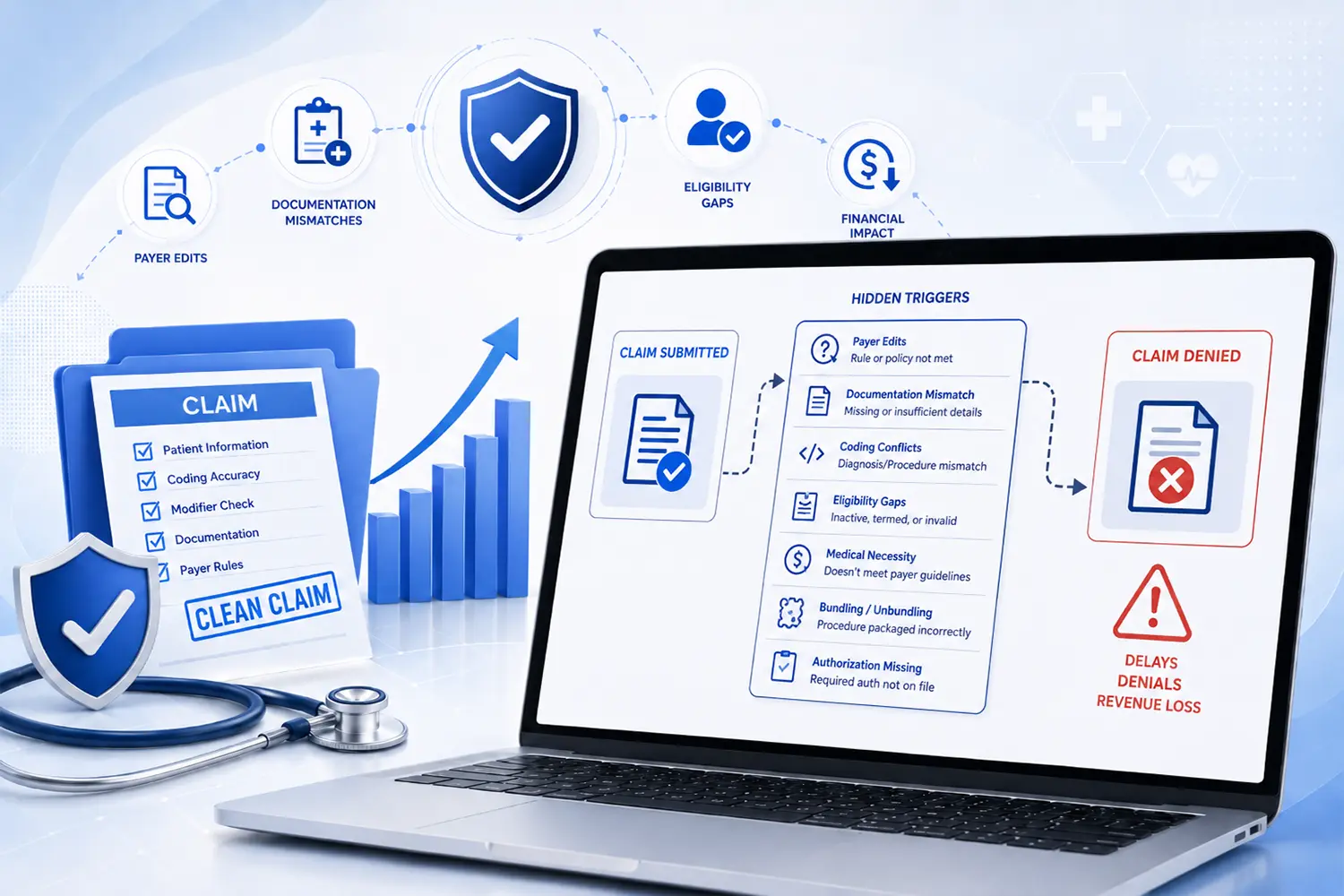
Healthcare organizations invest significant time and effort into submitting clean claims. Billing teams carefully verify patient information, coding accuracy, modifiers, and payer details before claims are transmitted. Yet despite these precautions, denied claims continue to disrupt revenue cycles across practices of all sizes.
For many billing professionals, this creates a frustrating question: If the claim was clean, why was it denied?
The answer lies in the growing complexity of payer requirements, documentation standards, and eligibility verification processes. Modern insurance carriers rely on advanced automated review systems that identify inconsistencies beyond those detected by traditional claim-scrubbing checks. As a result, even technically accurate claims can face delays or denials.
Understanding these hidden denial triggers is essential for billing teams and practice managers looking to improve reimbursement rates, reduce administrative rework, and strengthen overall revenue cycle performance.
What Is a Clean Claim

What Is a Clean Claim?

A clean claim is generally defined as a claim submitted without technical errors or missing information that would delay processing. These claims usually contain accurate patient demographics, valid CPT and ICD-10 codes, proper modifier usage, and complete provider information.
Most practices use claim scrubbing tools to identify formatting problems or coding conflicts before submission. These systems are highly effective for detecting standard billing errors. However, claim scrubbers do not account for every payer-specific rule or documentation expectation.
This is why a claim can appear completely accurate internally but still fail after reaching the payer.
In today’s healthcare environment, submitting a clean claim is only one part of successful reimbursement. Payers now evaluate claims using much deeper review criteria related to medical necessity, eligibility, provider documentation, and internal policy edits.
Why Clean Claims Still Get Denied

Why Clean Claims Still Get Denied

Many healthcare professionals assume denials occur primarily because of coding mistakes or incomplete information. While those issues still exist, a growing percentage of denials are caused by hidden workflow gaps and payer-side edits that billing teams may not immediately recognize.
Insurance companies have developed sophisticated automated systems designed to identify even minor inconsistencies. These systems simultaneously compare diagnosis codes, procedure codes, provider specialties, documentation history, authorization records, and coverage details.
As a result, claims may be denied for reasons unrelated to basic claim accuracy.
Common Hidden Denial Triggers
Hidden Trigger Why It Causes Denials
Payer-specific edits
Internal payer policies differ from standard coding rules
Documentation inconsistencies
Clinical notes fail to support billed services
Eligibility gaps
Insurance coverage information is outdated
Medical necessity concerns
Diagnosis does not justify treatment
Modifier conflicts
Incorrect modifier combinations trigger edits
Authorization issues
Missing or expired approvals
Frequency limitations
Services exceed payer-approved intervals
These denials often surprise billing teams because the claim itself appears technically correct before submission.
Payer Edits Billing Teams Often Miss

Payer Edits Billing Teams Often Miss

One of the most challenging aspects of modern medical billing is navigating payer-specific edits. Every insurance company applies its own reimbursement logic, and those rules change frequently.
A procedure approved by one payer may be denied by another despite identical coding and documentation. For billing teams managing multiple payers, this creates a constantly evolving challenge.
Payer edits often involve frequency limitations, bundling rules, place-of-service conflicts, and medical necessity reviews. In many cases, these edits are not immediately visible within standard billing software.
For example, a payer may deny a follow-up procedure because it was performed outside the insurer’s approved timeframe. Another payer may bundle multiple procedures into one reimbursement, even when providers bill them separately.

Medical necessity denials are particularly common. A procedure code may be technically accurate, but if the payer believes the diagnosis code does not adequately justify treatment, reimbursement may still be denied.
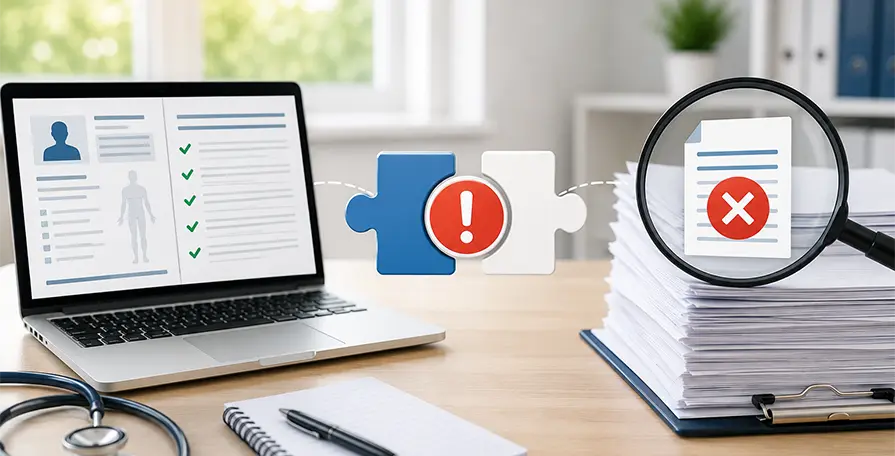
These situations create significant administrative burdens because billing teams must then investigate payer policies, submit appeals, or correct claims that initially appeared valid.
Documentation Mismatches & Coding Conflicts

Documentation Mismatches & Coding Conflicts

Strong coding practices are essential, but coding accuracy alone does not guarantee reimbursement. Clinical documentation must fully support every billed service.
This is where many clean claims fail.
Insurance payers increasingly review provider notes to ensure documentation aligns with the level of service billed. If the chart lacks sufficient detail, the payer may deny or downcode the claim even when the CPT code itself is correct.
This issue is especially common with Evaluation and Management (E/M) services, therapy encounters, telehealth visits, and prolonged services.
Providers may unintentionally under-document patient complexity, treatment rationale, or time spent during encounters. These gaps create inconsistencies between the clinical note and the claim submitted.
Common Documentation Problems
Documentation Issue Impact on Claims
Incomplete provider notes
Insufficient support for billed services
Vague diagnosis coding
Medical necessity concerns
Missing treatment details
Increased denial risk
Time documentation errors
Reimbursement delays for timed services
Coding-documentation mismatch
Downcoding or denials
Copy-paste charting also continues to create audit concerns for many organizations. Repeated note patterns may trigger payer scrutiny, particularly when documentation appears identical across multiple visits.
Improving provider education and documentation quality is critical for reducing these avoidable denials.

Eligibility Gaps & Front-End Errors

Many denied claims originate before the patient is even seen. Front-end eligibility verification remains one of the most overlooked areas of denial prevention. Small registration mistakes or outdated insurance details can disrupt the entire reimbursement process.
Even practices with experienced billing teams frequently encounter denials related to inactive coverage, incorrect payer selection, or missing referrals. These issues may seem minor individually, but collectively they create substantial revenue leakage over time.
Incorrect policy numbers, coordination of benefits conflicts, or expired authorizations can cause claims to fail immediately after submission. Unfortunately, these denials often require extensive follow-up work that could have been avoided with stronger front-end verification procedures.
Practices that verify eligibility only during initial registration are especially vulnerable. Insurance coverage changes frequently, even for returning patients.
Strong eligibility workflows should include verification before every patient visit to reduce preventable claim rejections.
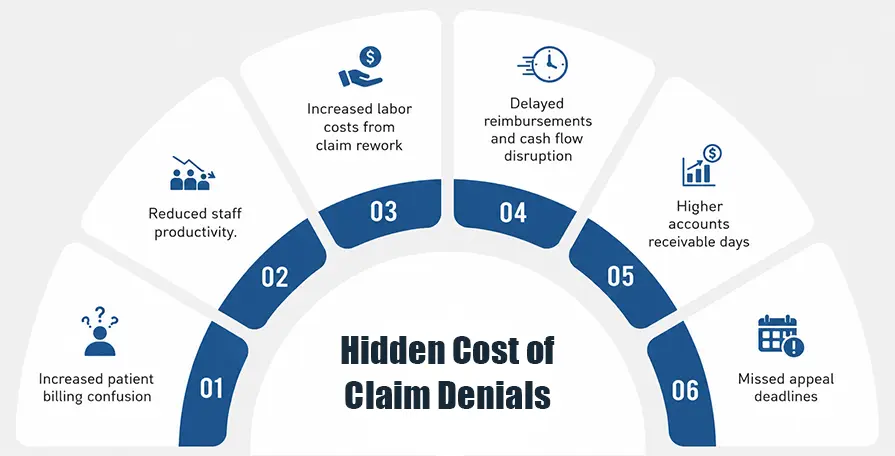
Hidden Cost of claim denials

The Financial Impact of Claim Denials

Claim denials affect far more than reimbursement timelines. They place ongoing pressure on staffing, operations, and financial stability.
Every denied claim requires additional administrative work, including research, corrections, appeals, and follow-up communication with payers. This process consumes valuable staff time that could otherwise support productivity and patient service.
Delayed reimbursements also affect cash flow consistency. For smaller practices, recurring denials can create serious operational strain.
Hidden Costs of Claim Denials
  • Increased labor costs from claim rework
  • Delayed reimbursements and cash flow disruption
  • Higher accounts receivable days
  • Missed appeal deadlines
  • Increased patient billing confusion
  • Reduced staff productivity
Industry research consistently shows that correcting denied claims costs significantly more than preventing denials upfront.
This is why denial prevention strategies have become a major priority for healthcare organizations focused on long-term revenue cycle performance.

Strategies to Reduce Preventable Denials
Reducing claim denials requires a proactive approach across the entire billing workflow. Successful organizations focus not only on claim submission accuracy but also on identifying operational weaknesses before they affect reimbursements.
Front-end verification processes should be strengthened to ensure insurance eligibility, referrals, and authorizations are validated before patient encounters occur.
Provider education is equally important. Clinical teams must understand how documentation quality directly affects reimbursement outcomes. Even highly skilled providers may unintentionally create billing risks if documentation lacks specificity or medical necessity support.
Denial trend analysis also plays a critical role in prevention. Practices that regularly review denial patterns can identify recurring payer edits, coding conflicts, or workflow inefficiencies before they become larger financial problems.
Maintaining updated payer knowledge is another essential strategy. Insurance policies evolve constantly, and billing teams must stay informed regarding coding changes, modifier requirements, and reimbursement guidelines.
Organizations that proactively adapt to payer expectations are better positioned to reduce preventable denials and improve collection rates.
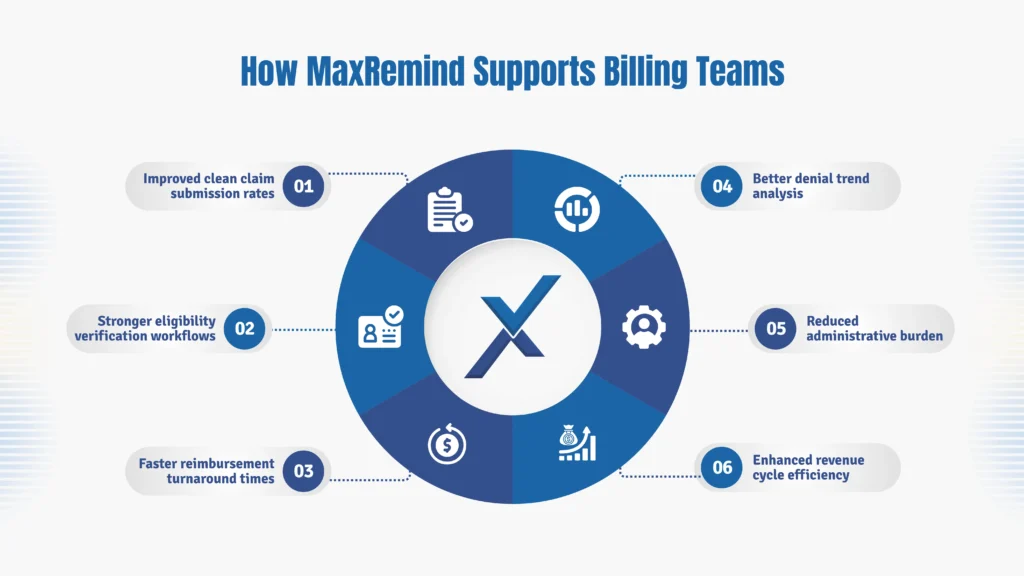
How MaxRemind Supports Billing Teams

How MaxRemind Helps Practices Reduce Claim Denials

Managing claim denials internally can become overwhelming as payer requirements grow more complex. Many healthcare organizations struggle to balance billing accuracy, compliance, staff workload, and reimbursement timelines simultaneously.

MaxRemind helps healthcare providers strengthen revenue cycle performance through proactive billing support, denial prevention strategies, and optimized RCM workflows.

By identifying hidden workflow gaps and improving billing accuracy, MaxRemind helps practices reduce preventable denials before they impact revenue.
How MaxRemind Supports Billing Teams
  • Improved clean claim submission rates
  • Stronger eligibility verification workflows
  • Faster reimbursement turnaround times
  • Better denial trend analysis
  • Reduced administrative burden
  • Enhanced revenue cycle efficiency
Rather than simply responding to denied claims after they occur, MaxRemind focuses on preventing reimbursement disruptions proactively.
This approach helps practices improve financial stability while allowing internal teams to focus more effectively on patient care and operational growth.

Final Thoughts

Submitting clean claims is no longer enough to guarantee reimbursement in today’s healthcare landscape.
Hidden payer edits, documentation inconsistencies, eligibility gaps, and evolving insurance policies continue to create challenges for billing teams and practice managers alike.
Reducing denials requires a broader strategy that combines accurate coding, strong documentation practices, proactive eligibility verification, and continuous payer policy monitoring.
Healthcare organizations that focus on denial prevention instead of denial correction are better positioned to improve cash flow, reduce administrative stress, and strengthen long-term revenue cycle performance.

With expert billing support and proactive RCM solutions, MaxRemind helps practices navigate complex payer requirements while improving reimbursement accuracy and operational efficiency.

Start Reducing Claim Denials Today

MaxRemind helps practices identify hidden denial triggers, improve clean claim accuracy, strengthen eligibility verification, and protect revenue before claims are rejected.
FAQs
What is considered a clean claim in medical billing?

A clean claim is a medical claim submitted without technical errors, missing information, or coding issues that could delay processing. It typically includes accurate patient demographics, valid CPT and ICD-10 codes, correct modifiers, and complete provider information.

Why do clean claims still get denied?

Even clean claims can be denied due to payer-specific edits, medical necessity concerns, documentation mismatches, eligibility verification issues, authorization problems, or frequency limitations imposed by insurance companies.

How can billing teams reduce claim denials?

Billing teams can reduce denials by strengthening eligibility verification processes, improving documentation accuracy, monitoring denial trends, staying updated on payer policies, and implementing proactive denial management strategies.

What are the most common documentation issues that cause denials?

Common documentation-related denial triggers include incomplete provider notes, vague diagnosis coding, missing treatment details, inaccurate time documentation, and mismatches between clinical documentation and billed services.

How does MaxRemind help healthcare practices reduce denied claims?

MaxRemind helps healthcare organizations reduce preventable denials through proactive revenue cycle management, stronger eligibility verification workflows, denial trend analysis, and optimized billing processes that improve reimbursement accuracy and cash flow.

Transform Your
Practice with
AI-Powered EHR

Reduce administrative burden, streamline workflows, accelerate revenue, and deliver exceptional patient care.