The Most Overlooked HIPAA Risks in Billing Workflows
Introduction: The Real Cost of a Billing Blind Spot
Risk 1: Unsecured Data Handling and PHI Transmission
-
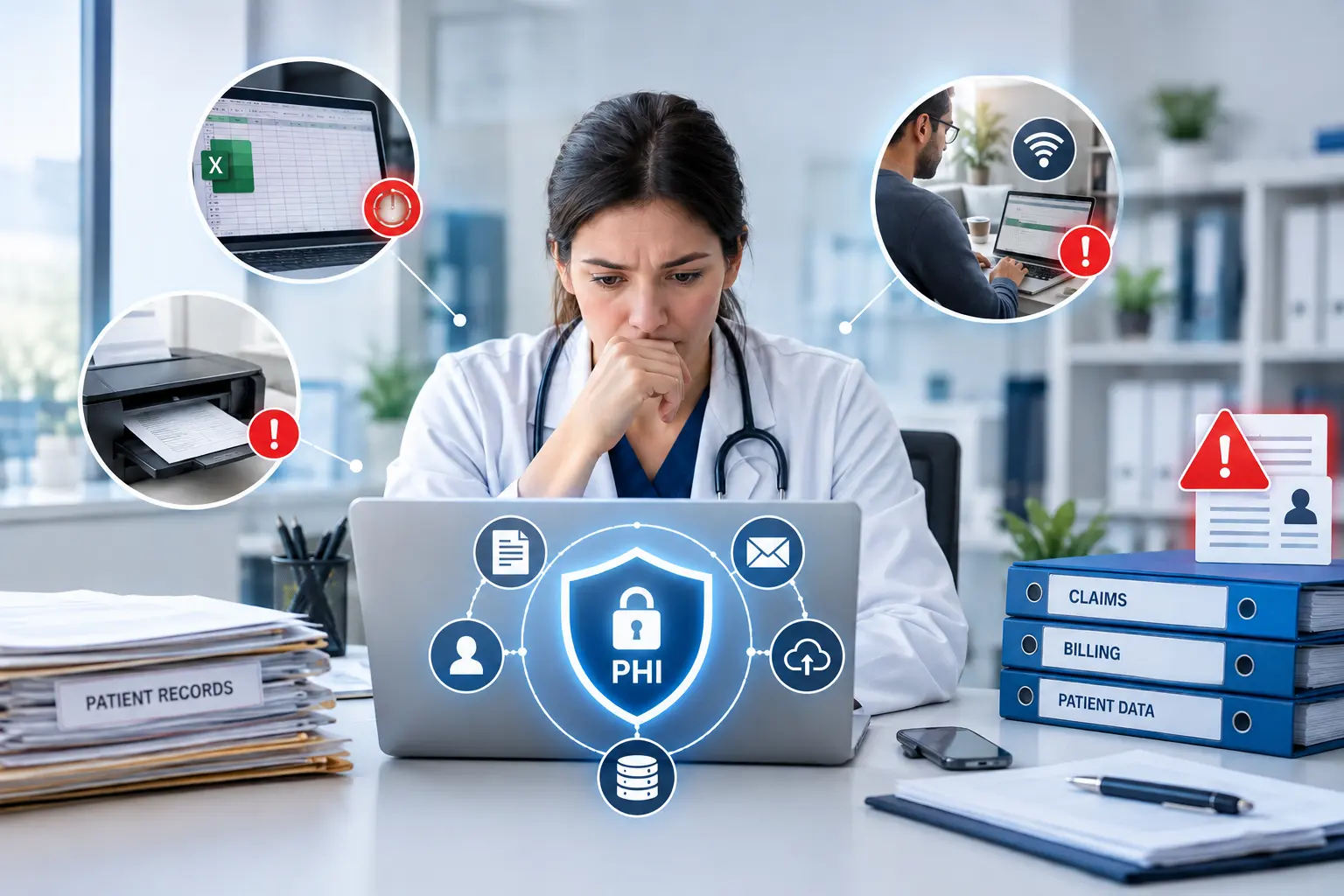
Unencrypted local exports:
Pulling a raw patient ledger into a spreadsheet on a desktop is a common shortcut for reconciliation. That file, sitting unencrypted on a hard drive, is a breach waiting to happen the moment the device is lost or compromised. -
Paper superbills in public areas:
A printed superbill left on a front-desk counter or in an unlocked tray exposes demographic and diagnostic data to anyone walking by. -
Non-compliant communication channels:
Texting a patient balance, emailing a claim detail without encryption, or messaging billing codes through a personal app all bypass the secure, auditable channels HIPAA requires.
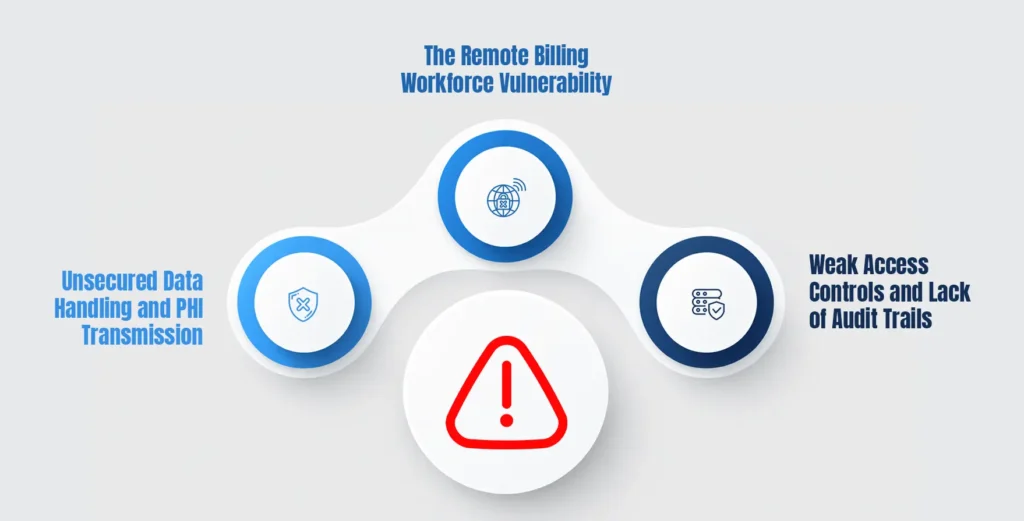
Risk 2: The Remote Billing Workforce Vulnerability
-
Public Wi-Fi without a VPN:
A biller working from a café or airport lounge on an unsecured network exposes every claim they touch to interception. -
Shared home devices:
A laptop used for billing work and also shared with a spouse or kids blurs the line between a controlled work environment and an open one. -
Unlocked screens:
Stepping away from a laptop displaying billing codes and patient demographics, even for a few minutes, is an unmonitored access point.
Risk 3: Weak Access Controls and Lack of Audit Trails
-
No accountability:
Without role-based permissions, you can't say who should have touched a given record, let alone who actually did. -
No audit trail:
If a record is viewed, edited, or exported without a granular log, a practice can't answer the first question an OCR investigator asks: who accessed this, and why. -
Insider risk goes undetected:
Most PHI misuse isn't external. It's an employee viewing records outside their job function, and blanket access makes that invisible until it's too late.
The Billing Security Blueprint
| Core Metric | Vulnerable/Legacy Billing Workflows | HIPAA-Shielded/Automated Billing Ecosystems |
|---|---|---|
|
Remote Access Protocols |
Personal devices, no VPN, unsecured home Wi-Fi |
Enterprise VPN, managed devices, zero-trust access |
|
PHI Data Handling/Transmission |
Unencrypted spreadsheets, email attachments, fax |
End-to-end encrypted clearinghouse transmission |
|
Role-Based Access Controls |
Blanket system access for all staff |
Granular, permission-based access by job function |
|
Audit Trail Logging |
Little to no user-level activity tracking |
Full audit logs on every view, edit, and export |
|
Staff Compliance Monitoring |
Annual training, rarely enforced |
Ongoing monitoring with routine remote-work audits |
Actionable Defense Plan: Securing Your Billing Workflows
- Implement multi-factor authentication (MFA) on every system that touches PHI, no exceptions for convenience.
- Enforce role-based access controls so staff only see the data their job function requires.
- Automate end-to-end encryption for all data in transit across clearinghouses and at rest in storage.
- Run routine remote-work audits to check VPN usage, device compliance, and screen-lock policies.
- Turn on granular audit logging for every view, edit, and export, with alerts for unusual activity.
- Replace informal communication channels with HIPAA-compliant messaging and secure patient portals.
- Schedule recurring risk assessments, not a one-time review, since workflows and threats both evolve.
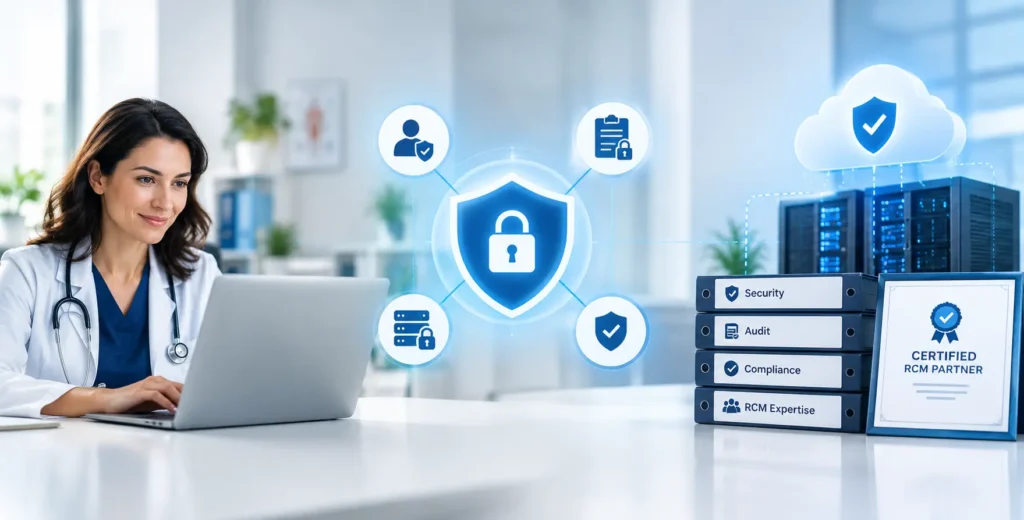
Eliminating the Compliance Strain with Managed RCM
Secure Your Revenue with MaxRemind
Secure Your Billing Workflow Before a Compliance Gap Becomes a Breach
- What is the biggest HIPAA risk in medical billing?
-
Weak access controls. When every staff member has blanket access to billing software instead of role-based permissions, practices lose the ability to track who viewed, edited, or exported patient records, which is the first thing an OCR investigator checks.
- Do remote billing teams need a separate HIPAA policy?
-
Yes. Remote work introduces risks that in-office policies don't cover, including public Wi-Fi use, shared home devices, and unlocked screens. A remote-specific policy with enforced VPN use and device compliance closes those gaps.
- Can a small practice afford enterprise-level billing security?
-
Yes, through a managed RCM partner. Building encrypted infrastructure and audit systems in-house is expensive, but partnering with a certified RCM firm gives small practices that same protection without the capital investment.
- What counts as a HIPAA violation in billing, even without a data breach?
-
Exporting PHI into an unencrypted spreadsheet, texting a patient balance, or leaving a printed superbill in a public area all count as violations, whether or not the data is ever accessed by an unauthorized party.
- How often should a practice audit its billing workflow for HIPAA compliance?
-
Continuously, not annually. Risk assessments should run on a recurring schedule, paired with routine remote-work audits and real-time monitoring, since new tools and workflows introduce new vulnerabilities on an ongoing basis.
Transform Your
Practice with
AI-Powered EHR
Reduce administrative burden, streamline workflows, accelerate revenue, and deliver exceptional patient care.
- AI-Assisted Documentation
- HIPAA-Compliant Platform
- Faster Claims & Billing
- Specialty-Based Solutions