Hospital Margins Are Shrinking in 2026 What Healthcare Leaders Must Prioritize Now

Expenses Continue to Outrun Revenue Growth
The problem is compounded by factors largely outside a hospital’s direct control: pharmaceutical pricing volatility, supply chain disruptions, and persistent inflationary pressures. As a result, many organizations are shifting their focus toward expense sustainability and operational efficiency rather than relying solely on top-line revenue growth.

Labor Costs Are Stabilizing
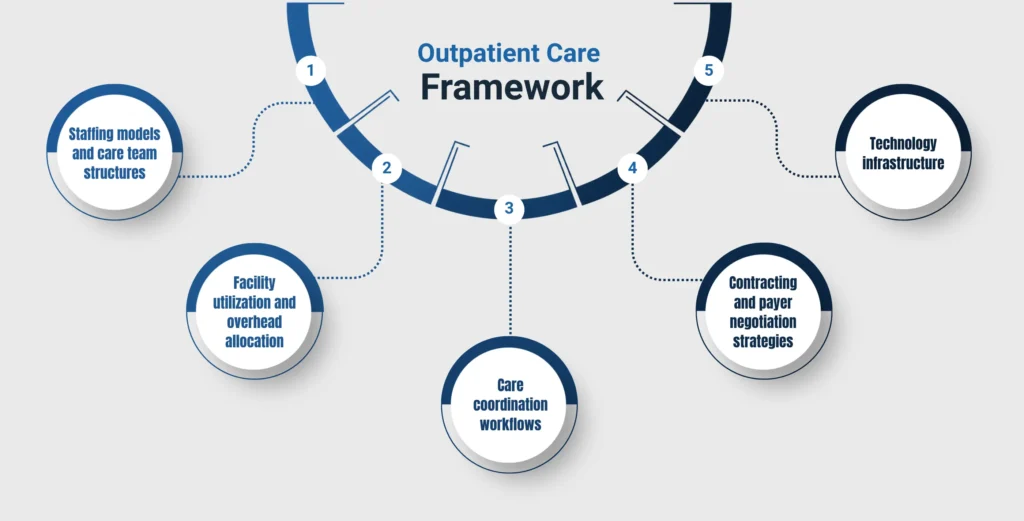
Outpatient Growth Is Reshaping Healthcare Operations
- Staffing models and care team structures
- Facility utilization and overhead allocation
- Care coordination workflows
- Contracting and payer negotiation strategies
- Technology infrastructure
Revenue Cycle Challenges Are Quietly Eroding Margins
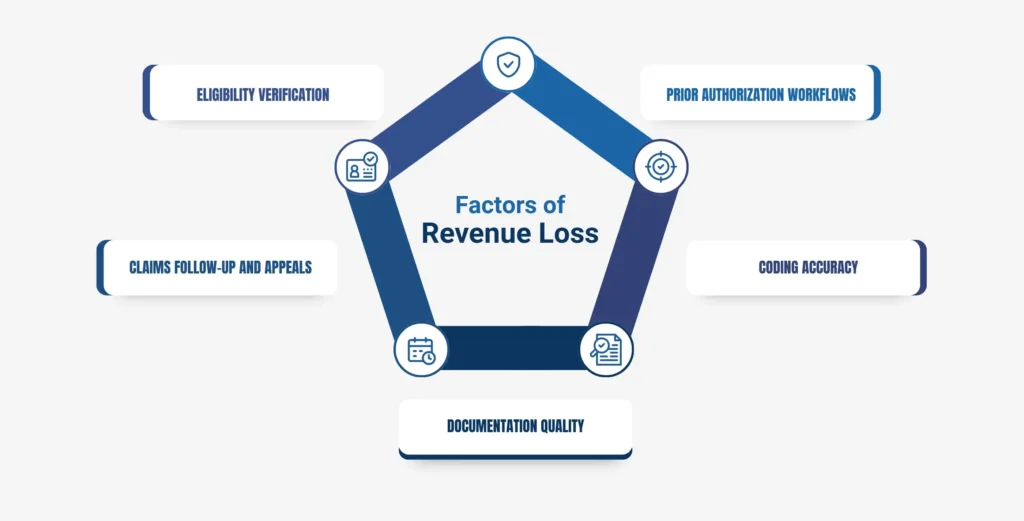
For many systems, denial management has become the largest hidden threat to profitability. Even small inefficiencies in:
- Eligibility verification
- Prior authorization workflows
- Coding accuracy
- Documentation quality
- Claims follow-up and appeals
This is where MaxRemind’s Revenue Cycle Management services and AI-supported Rule-Based System (RBS) make a measurable difference, catching errors before claims go out the door, reducing denials, and recovering revenue that would otherwise be left on the table.
Payer Mix Shifts Are Increasing Financial Risk

Operational Excellence Is Now a Strategic Imperative
Operational excellence is no longer optional.
- Improving cost visibility across service lines
- Reducing unnecessary clinical and administrative variation
- Strengthening revenue cycle performance end-to-end
- Monitoring utilization trends proactively
- Identifying revenue leakage earlier in the cycle
- Using analytics for predictive financial decision-making
The organizations that thrive in 2026 will not necessarily be the ones generating the highest revenue. They will be the ones capable of controlling costs, improving operational agility, and protecting every dollar earned.
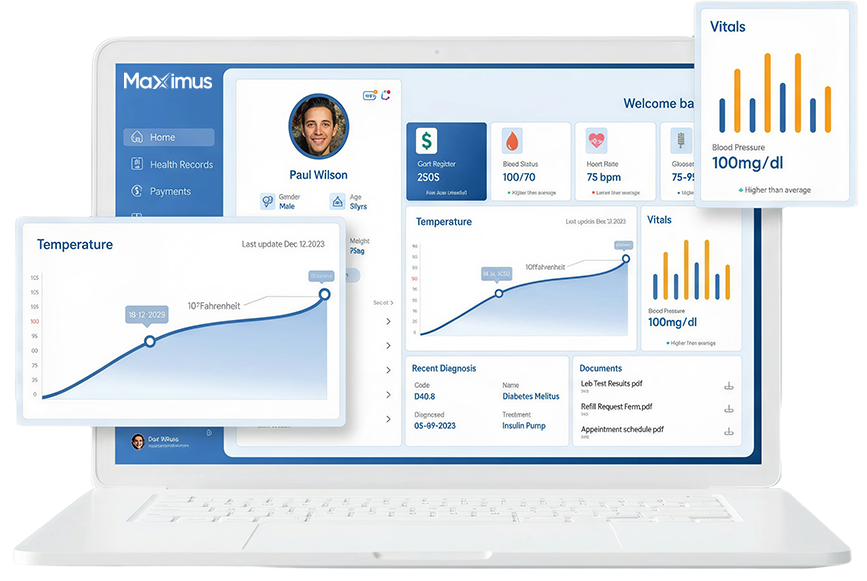
MaxRemind’s Advanced Analytics & Reporting services and Maximus EHR give your practice the real-time visibility needed to catch problems early and make smarter decisions.
What This Means for Your Practice
- Tightening revenue cycle processes from front-end to back-end
- Reducing claim denials and eliminating revenue leakage
- Optimizing outpatient operations and staffing models
- Improving data visibility and financial reporting
- Investing in smarter, AI-supported analytics
- Enhancing operational accountability across departments
Book a Demo – Talk to a MaxRemind expert and see how our solutions can protect and grow your revenue.
Is Your Practice Protected Against These Margin Pressures?
At MaxRemind, we’ve spent over 20 years helping healthcare practices maximize revenue, reduce denials, and operate with greater efficiency. Our end-to-end solutions: from Medical Billing & Coding to Revenue Cycle Management, Provider Credentialing, and AI-powered Analytics are built specifically to help organizations like yours thrive in today’s challenging financial environment.
Don’t let shrinking margins catch you off guard.
Protect Your Revenue Before Margins Shrink Further
- Why are hospital margins shrinking in 2026 even though revenues are going up?
-
The core problem is that operational costs, particularly drug expenses and supply costs, are rising faster than revenue gains. Even as outpatient volumes grow and billing improves, pharmaceutical pricing volatility, supply chain disruptions, and inflation are eroding profits before organizations can keep them. In short, earning more doesn't help if spending is growing even faster. Hospitals need to close that gap through operational efficiency and tighter revenue cycle management.
- What is revenue leakage, and how does it affect my practice's bottom line?
-
Revenue leakage refers to money your practice has already earned but fails to collect, due to denied claims, coding errors, incomplete documentation, missed prior authorizations, or inadequate follow-up. Even small inefficiencies at each step of the revenue cycle compound into significant annual losses. Industry data shows that initial denial rates and unrecovered leakage are both increasing in 2026. A proactive approach, like MaxRemind's Revenue Cycle Management, identifies and plugs those leaks before they scale.
- How can smaller practices survive payer mix shifts toward Medicare and Medicaid?
-
As the patient population ages, more reimbursements are coming from government programs that pay at lower rates than commercial insurers. Smaller practices can offset this by maximizing reimbursement on every claim — reducing denials, ensuring accurate coding, and submitting clean claims the first time. Strengthening internal operations is the most controllable lever available. MaxRemind's Medical Billing & Coding services and AI-supported Rule-Based System are specifically built to help practices do exactly that, regardless of payer mix.
- Is this shift to outpatient care a financial opportunity or a risk for providers?
-
It's both. Outpatient care generally has lower delivery costs and is growing faster than inpatient services, which is a genuine opportunity for practices that adapt quickly. However, providers who are slow to adjust their staffing models, care coordination workflows, and technology infrastructure risk funding two systems at once: the old inpatient infrastructure and a new outpatient operation. The organizations that invest early in operational flexibility, including the right EHR and practice management tools, are best positioned to benefit from this shift.
- How can MaxRemind help my practice stay financially resilient in 2026?
-
It's both. Outpatient care generally has lower delivery costs and is growing faster than inpatient services, which is a genuine opportunity for practices that adapt quickly. However, providers who are slow to adjust their staffing models, care coordination workflows, and technology infrastructure risk funding two systems at once: the old inpatient infrastructure and a new outpatient operation. The organizations that invest early in operational flexibility, including the right EHR and practice management tools, are best positioned to benefit from this shift.
Transform Your
Practice with
AI-Powered EHR
Reduce administrative burden, streamline workflows, accelerate revenue, and deliver exceptional patient care.
- AI-Assisted Documentation
- HIPAA-Compliant Platform
- Faster Claims & Billing
- Specialty-Based Solutions