

Cash Flow Forecasting for Medical Practices: What Your Billing Data Reveals
Introduction: Why Cash Flow Forecasting Matters
For CFOs and practice administrators, the key question is not “How much revenue did we generate?” but rather:
“When will we actually receive it?”
The Financial Challenge Faced by Medical Practices
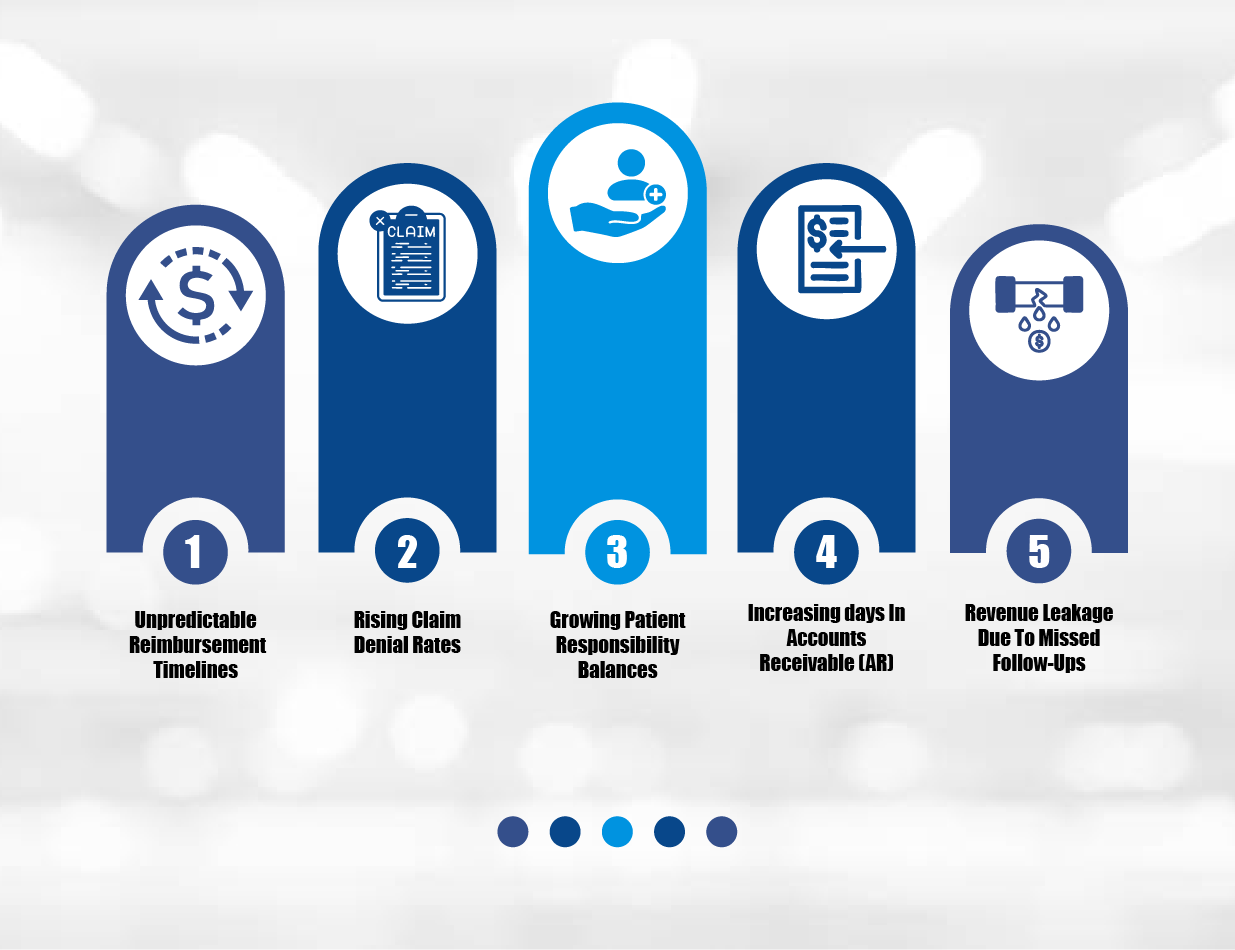
- Unpredictable reimbursement timelines
- Rising claim denial rates
- Growing patient responsibility balances
- Increasing days in accounts receivable (AR)
- Revenue leakage due to missed follow-ups
What Billing Data Really Reveals
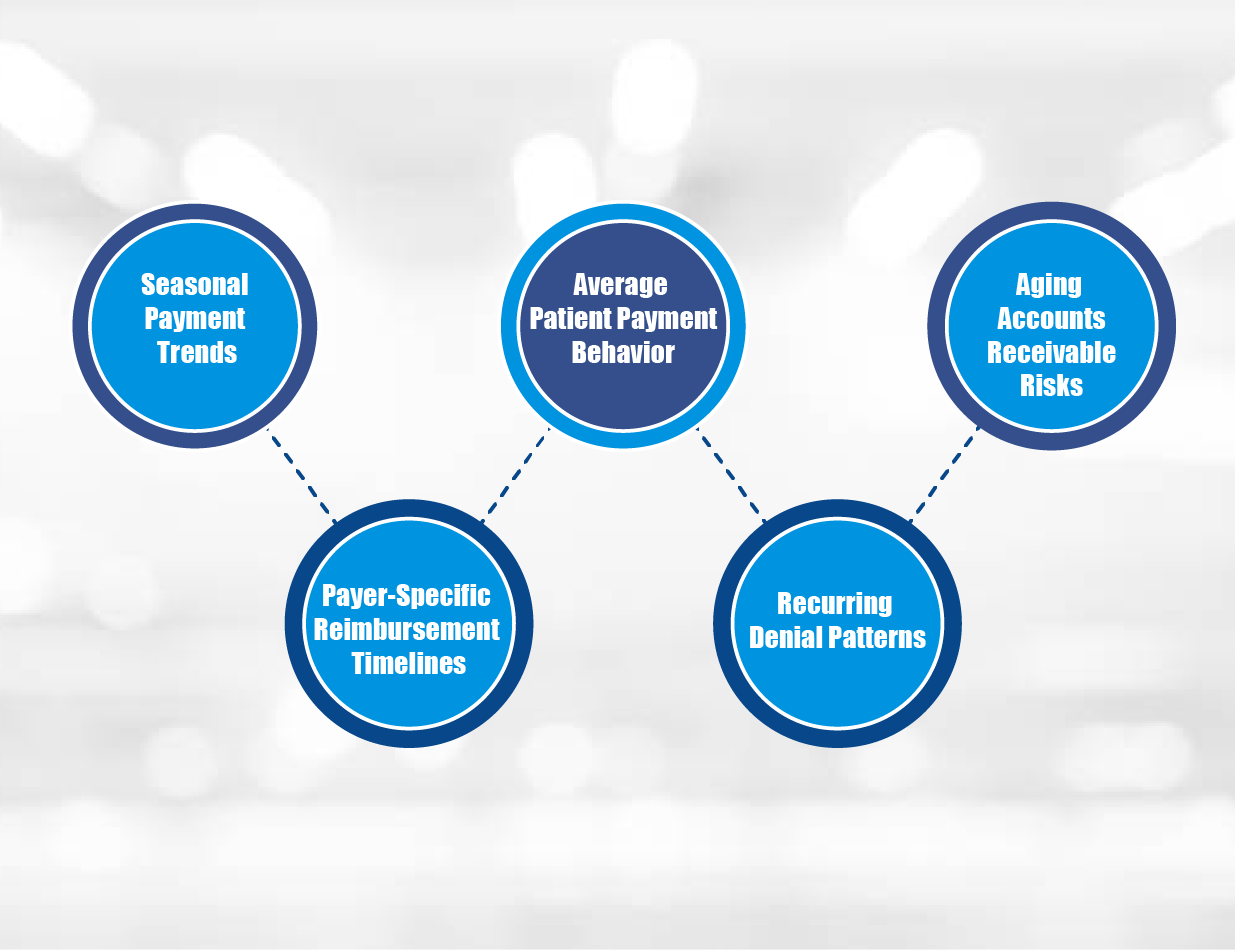
- Seasonal payment trends
- Payer-specific reimbursement timelines
- Average patient payment behavior
- Recurring denial patterns
- Aging accounts receivable risks
Key Revenue Cycle Metrics That Predict Cash Flow
-
Days in Accounts Receivable (AR)
Days in AR directly impact liquidity. An upward trend signals delayed collections and potential cash shortages. -
Clean Claim Rate
A lower clean claim rate predicts future delays and increased administrative costs. High-performing practices maintain clean claim rates above industry benchmarks. -
Denial Rate Trends
Tracking denial patterns reveals revenue at risk before it becomes a cash flow issue. Recurring denial codes often signal workflow inefficiencies. -
Net Collection Ratio
This metric shows how much collectible revenue is actually being collected. Declining ratios indicate revenue leakage. -
Aging Reports
Claims moving into 60, 90, or 120-day buckets significantly reduce predictability and increase collection risk.
Turning Historical Data into Predictive Insights
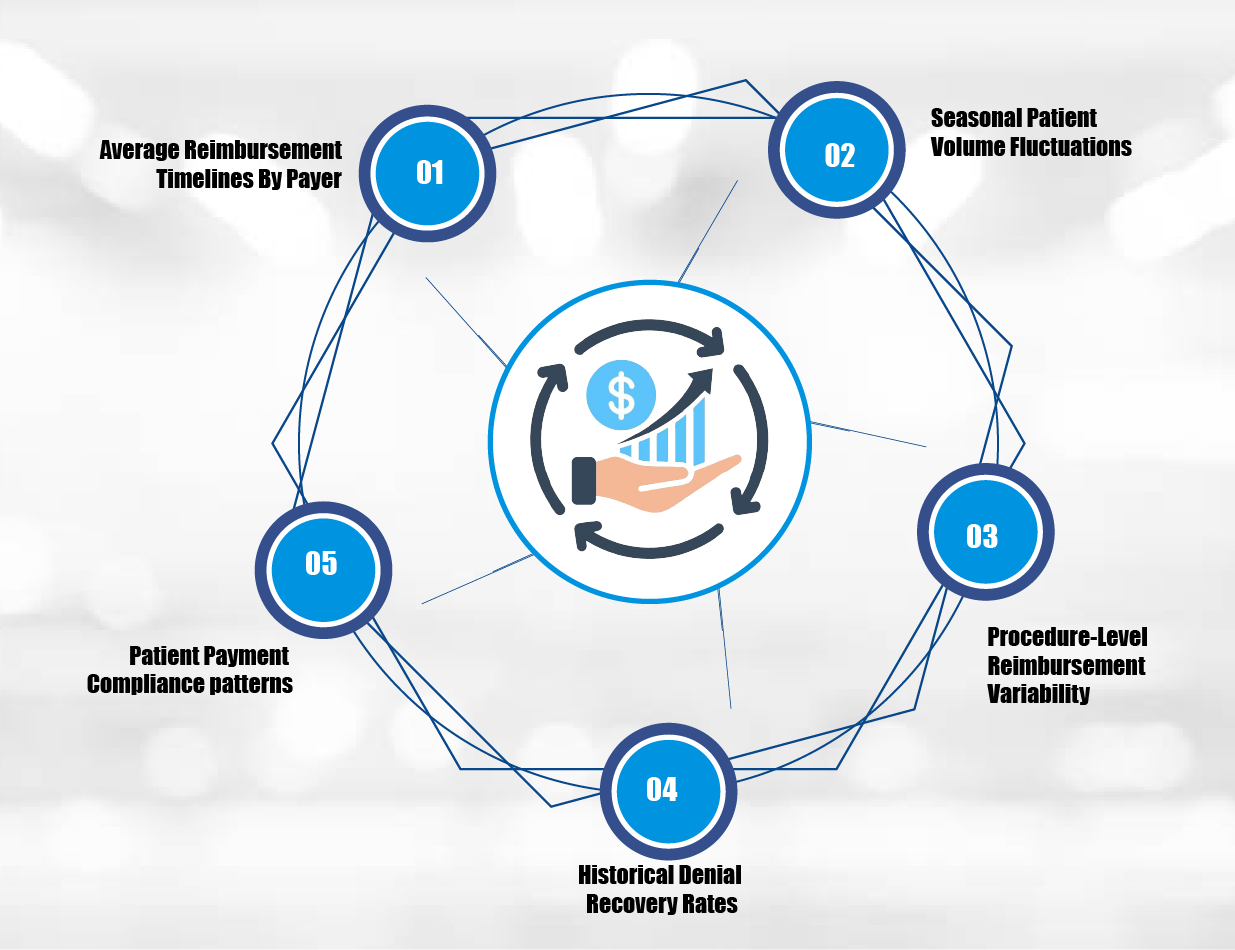
- Average reimbursement timelines by payer
- Seasonal patient volume fluctuations
- Procedure-level reimbursement variability
- Historical denial recovery rates
- Patient payment compliance patterns
Practices can project future inflows with greater precision. For example:
- Anticipate revenue dips
- Plan staffing with confidence
- Align vendor payments with expected inflows
- Avoid emergency financing decisions
The Role of Technology in Healthcare Cash Flow Forecasting
- Identify high-risk claims before submission
- Flag denial trends in real time
- Monitor payer performance patterns
- Provide dashboard-based financial forecasting

- Scenario planning
- Budget alignment
- Expansion feasibility analysis
- Investment decision-making
Building a Data-Driven Forecasting Strategy
Step 1: Centralize Billing Data
Fragmented systems reduce visibility. Integrating billing, coding, and payment data ensures forecasting accuracy.
Step 2: Standardize KPIs
Define consistent performance metrics such as:
- Days in AR
- Clean claim rate
- Denial recovery percentage
- Net collection ratio
Step 3: Analyze Trends Monthly
Forecasting is dynamic. Review KPI trends regularly to adjust projections.
Step 4: Incorporate Payer Mix Analysis
Different payers reimburse at different speeds and rates. Forecasts must reflect this variability.
Step 5: Automate Reporting
Automation reduces human error and ensures real-time financial awareness.
From Reactive to Predictive Financial Management
- Predict revenue shortfalls before they occur
- Improve collections proactively
- Reduce denial-related revenue loss
- Strengthen long-term financial planning
Unlock the Power of Your Billing Data
Accurate cash flow forecasting for medical practices requires:
- Clean, centralized billing data
- Consistent KPI monitoring
- Predictive analytics
- Automated revenue cycle oversight
Strengthen Your Forecasting with Smarter Revenue Cycle Management
MaxRemind empowers medical practices with advanced billing analytics, denial management, and revenue cycle visibility designed to improve financial predictability. If your organization is ready to move from uncertainty to clarity, it’s time to leverage smarter RCM solutions.
Turn Billing Data Into Predictable Cash Flow
- What is cash flow forecasting in a medical practice?
-
Cash flow forecasting in a medical practice is the process of estimating future revenue based on billing activity, reimbursement timelines, payer behavior, and patient payment trends. Instead of relying only on past financial reports, forecasting uses billing data to predict when payments are likely to be received. This helps CFOs and administrators manage operational expenses, reduce financial uncertainty, and plan strategically for growth.
- How does billing data help improve cash flow forecasting?
-
Billing data improves cash flow forecasting by revealing patterns in reimbursement speed, denial frequency, accounts receivable aging, and collection performance. When practices analyze historical claim submissions and payment timelines, they can identify recurring delays or payer-specific trends. This allows leadership to anticipate revenue inflows more accurately and proactively address risks before they affect liquidity.
- Which revenue cycle metrics are most important for forecasting?
-
The most important revenue cycle metrics for forecasting include days in accounts receivable, clean claim rate, denial rate, net collection ratio, and aging report trends. These metrics serve as early indicators of payment delays and revenue leakage. Monitoring them consistently enables medical practices to estimate when cash will be received and identify potential disruptions in the revenue cycle.
- How can predictive analytics improve healthcare financial planning?
-
Predictive analytics enhances healthcare financial planning by using historical billing and reimbursement data to project future revenue patterns. By analyzing trends such as payer turnaround times, seasonal patient volumes, and denial recovery rates, practices can build more accurate financial projections. This forward-looking insight allows organizations to align staffing, budgeting, and operational investments with expected cash flow.
- How can an RCM partner improve cash flow visibility?
-
An experienced revenue cycle management partner improves cash flow visibility by providing real-time reporting, advanced billing analytics, denial management tracking, and automated claim monitoring. With greater transparency into financial performance and reimbursement timelines, practices gain clearer insight into expected revenue. This level of visibility supports stronger forecasting, reduces uncertainty, and enables more confident financial decision-making.