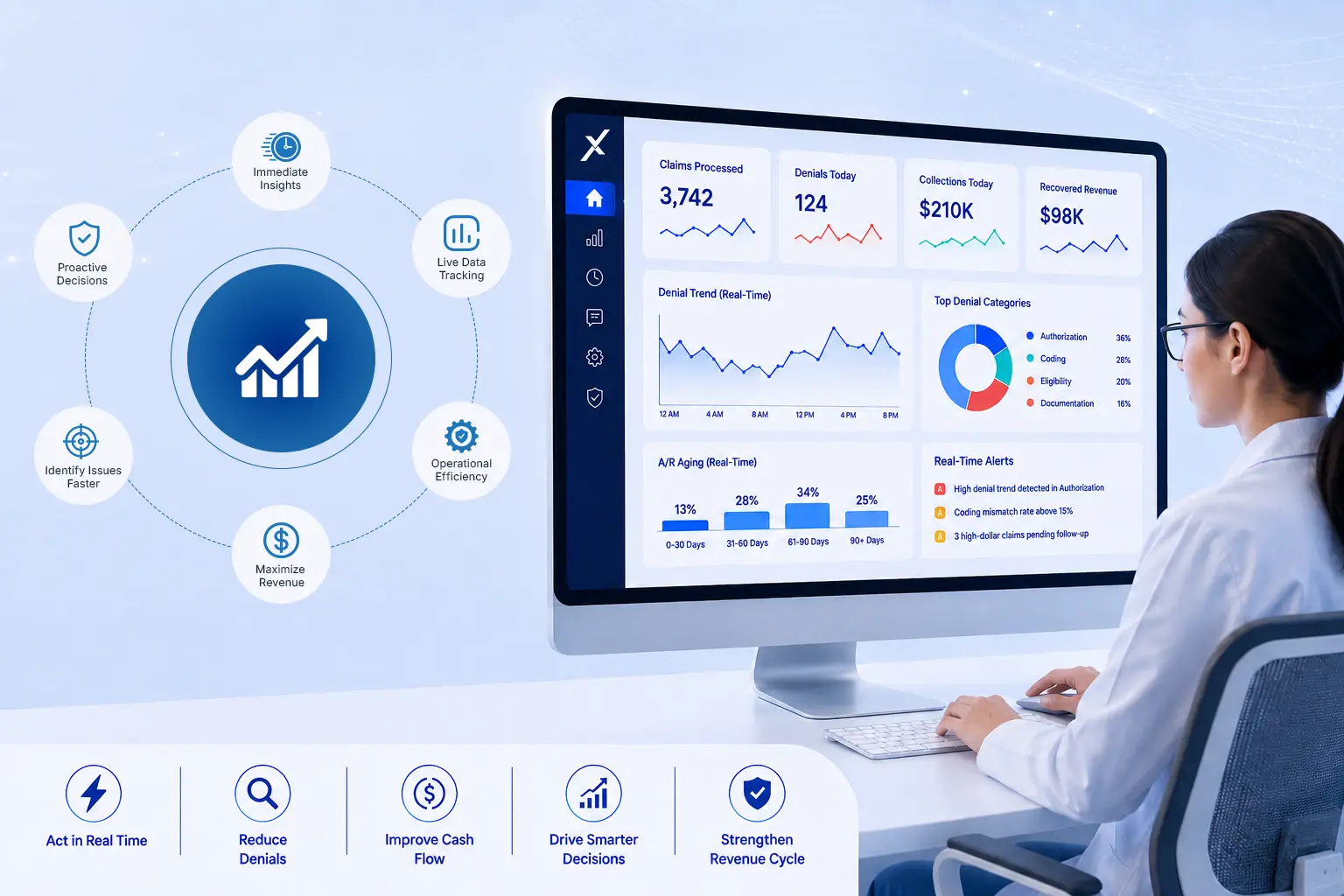
How Real-Time Analytics Improve Revenue Cycle Decisions
Introduction: The Death of the Rearview Mirror
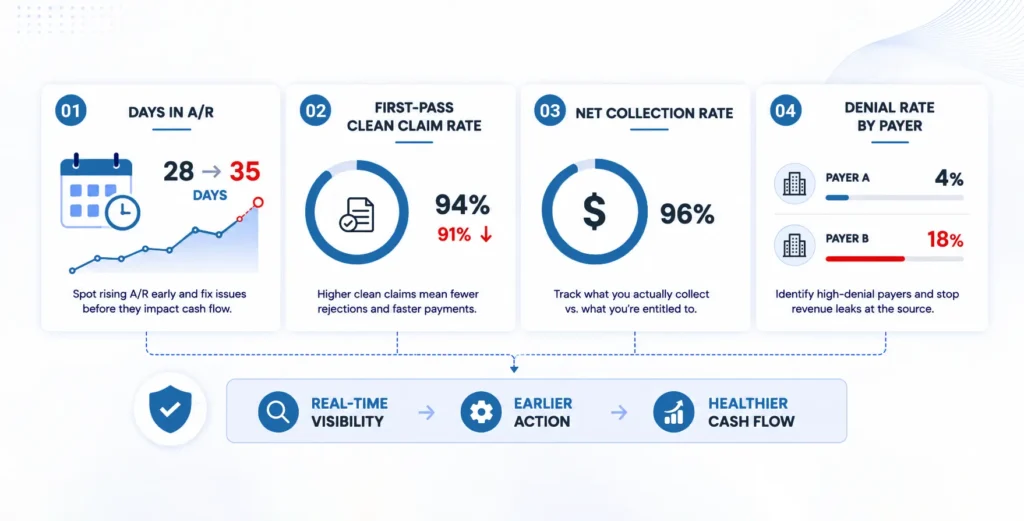
The Core RCM KPIs Every CFO Must Monitor in Real-Time
Days in Accounts Receivable (A/R)
First-Pass Clean Claim Rate
Net Collection Rate
Denial Rates by Payer
Left unmonitored, small deviations in these four KPIs compound. A 2% dip in clean claim rate this week becomes a six-figure write-off by quarter end. Real-time tracking stops that compounding before it starts.
Inside the Command Center: The Role of Interactive Dashboards
- By specialty:
Isolate whether cardiology claims are denying at a different rate than internal medicine, and why. - By department:
Identify if front-desk eligibility verification or back-office coding is the actual bottleneck. - By individual coder or biller:
Pinpoint whether an error pattern traces back to one team member who needs retraining, not a systemic process failure.
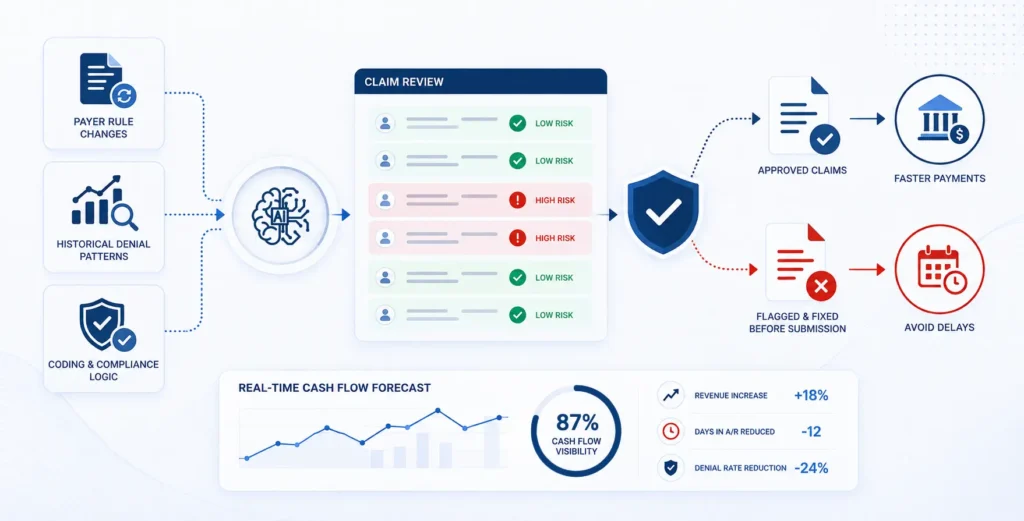
Proactive Cash Flow Forecasting and Denial Mitigation
- Claims with a high denial probability get flagged and corrected before submission.
- Billing managers see which specific payer rules changed this week, not last quarter.
- Cash flow forecasts update continuously based on what’s actually moving through the pipeline, not a static projection built on last month’s numbers.
This is the shift from denial management to denial prevention. Fixing a claim before it leaves the clearinghouse costs a fraction of what it costs to appeal a denial after the fact, and it gets the payment moving weeks sooner.
Optimizing Payer Mix and Negotiating Power
Real-time analytics gives negotiators exact figures on:
- True cost to collect per payer, factoring in denial rework, appeal time, and administrative overhead.
- Payer-specific denial rates, broken down by CPT code and service line.
- Average reimbursement timelines, showing which payers consistently pay late relative to contracted terms.
Inefficiency 3: Repetitive Claim Scrubbing and Formatting
| Indicator | Static End-of-Month Reporting | Real-Time RCM Analytics |
|---|---|---|
|
Visibility into Denials |
Surfaces 30-45 days after submission |
Flagged within hours of payer response |
|
KPI Tracking Agility |
Fixed monthly snapshots, no trend context |
Live, continuously updated dashboards |
|
Cash Flow Forecasting |
Backward-looking, based on closed periods |
Predictive, based on live claims data |
|
Payer Contract Auditing |
Manual, quarterly or annual review |
Ongoing, payer-specific performance tracking |
|
Administrative Decision Latency |
Weeks between issue and correction |
Same-day operational adjustments |
Bridging Tech and Strategy: The Managed RCM Solution
- Dashboards that billing staff and administrators actually use daily, not a report someone opens once a month.
- Denial prevention logic running on every claim before submission, without the practice building or maintaining that infrastructure.
- Payer performance data ready the moment leadership needs it for a negotiation or a budget review.
Take Control of Your Revenue Cycle Today
Static reporting is a rearview mirror. It shows you where your revenue cycle has been, never where it’s about to break. MaxRemind runs on real-time analytics infrastructure built specifically for medical groups that need to see problems the moment they surface, not thirty days later. Our results speak for the model:
- 23% average increase in practice revenue for groups that switch to our RCM platform.
- 99% first-pass clean claim rate, cutting denial rework before it starts.
- 24 days or lower average A/R, keeping cash moving instead of sitting in limbo.
Stop Managing Revenue with Last Month’s Data
- What's the biggest risk of relying on end-of-month financial reports for RCM decisions?
-
By the time the report is generated, the underlying issue, whether a denial pattern or a coding error, has often repeated across weeks of claims. The financial damage is already locked in.
- Which RCM KPI should CFOs prioritize tracking in real time first?
-
Days in A/R and denial rates by payer typically offer the fastest return, since both directly signal cash flow problems while they're still small and correctable.
- Can real-time analytics actually prevent denials, or just report them faster?
-
Predictive rules engines can flag high-risk claims before submission by comparing them against live payer policy changes, preventing many denials rather than just reporting them sooner.
- How does real-time data improve payer contract negotiations?
-
It gives CFOs precise, payer-specific figures on denial rates, cost to collect, and reimbursement timelines, replacing vague averages with concrete leverage during renegotiation.
- Is real-time RCM analytics realistic for smaller, independent practices?
-
Yes. Outsourced RCM partners like MaxRemind embed the analytics infrastructure directly into daily billing workflows, giving smaller groups enterprise-level visibility without the upfront software investment.
Transform Your
Practice with
AI-Powered EHR
Reduce administrative burden, streamline workflows, accelerate revenue, and deliver exceptional patient care.
- AI-Assisted Documentation
- HIPAA-Compliant Platform
- Faster Claims & Billing
- Specialty-Based Solutions