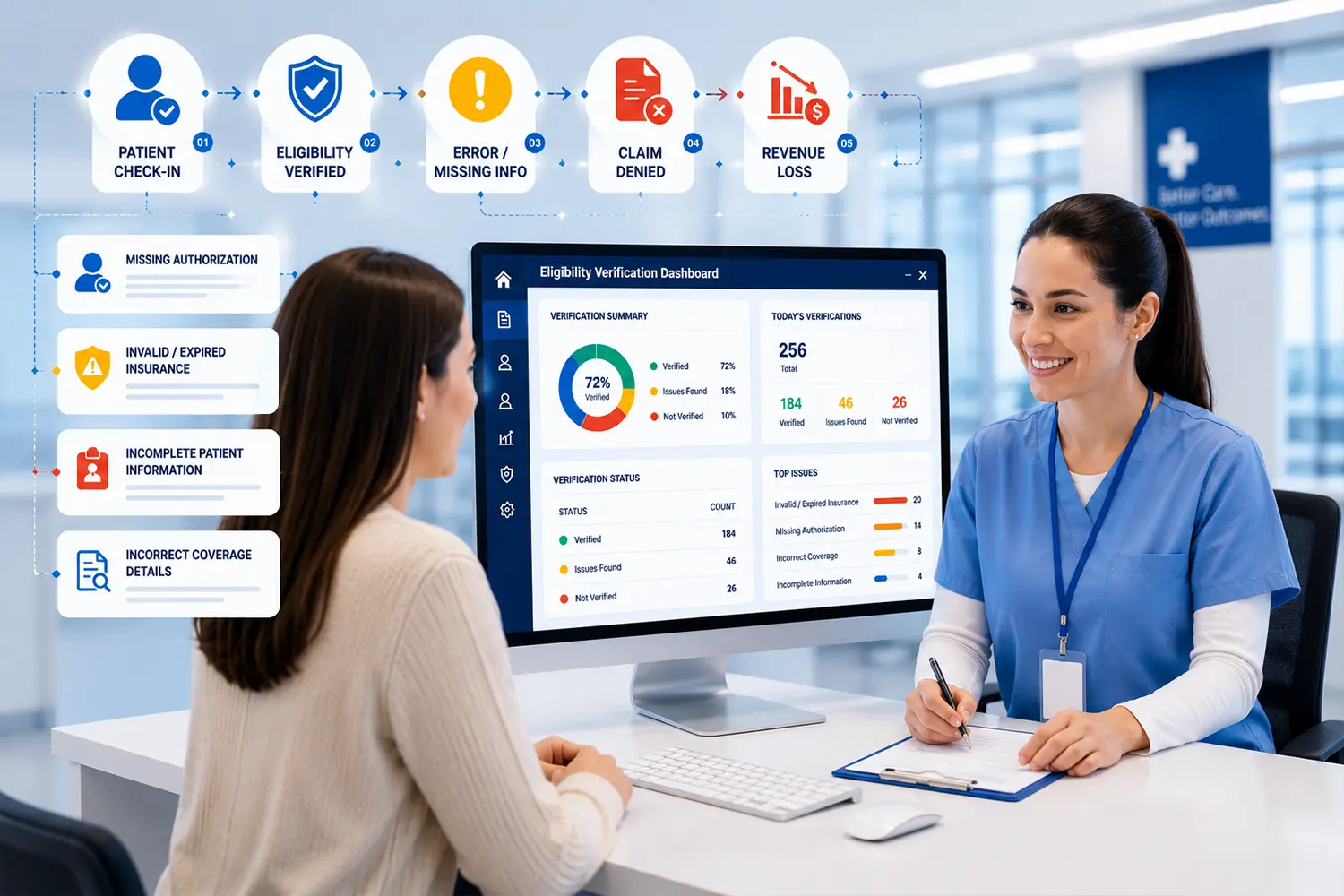
How Eligibility Verification Errors Create Revenue Leakage
Schedule a FREE Trial with MaxRemind
What Is Revenue Leakage – And Why Should Your Front Desk Care?
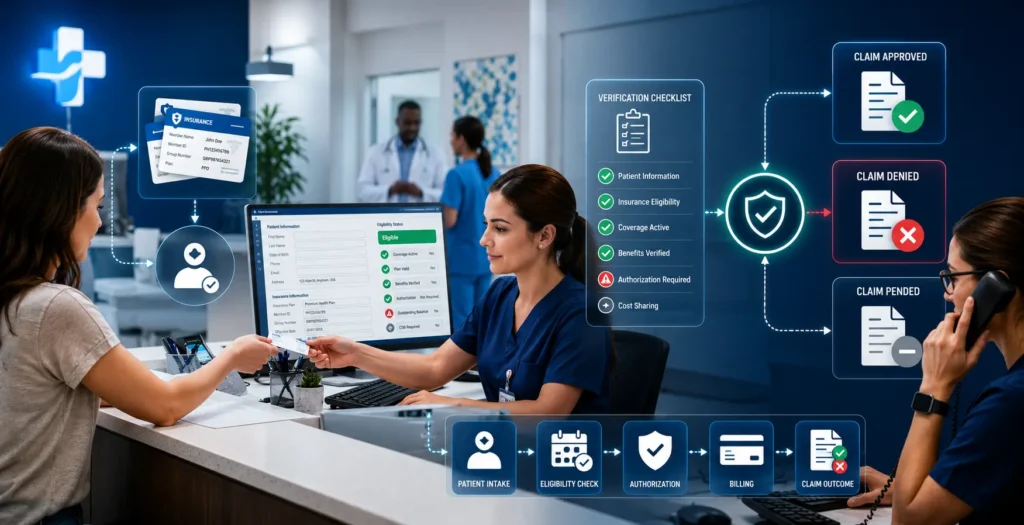
The Link Between Eligibility Verification Errors and Denied Claims
The Most Common Eligibility Verification Mistakes
- Confirming solely at the time of scheduling, not before the appointment. Modifications to insurance. A patient who had coverage at the time of booking might not have it on the day of the appointment. A patient with active coverage at the time of booking may have switched employers, reached annual limits, or altered their plan by the date of the visit.
- Utilizing obsolete payer details. Relying on obsolete payer details and failing to monitor authorization expiration dates are some of the primary reasons verification is unsuccessful.
- Errors in manual data entry. An error in the member identification number. An incorrect date of birth. A tiny error, such as inputting an incorrect patient ID, could lead to an instant rejection of the claim.
- Skipping secondary insurance. Numerous patients possess dual insurance. Not having a backup plan results in losing potential income.
- Lack of interaction between the front desk and billing. When the billing and front desk teams do not communicate precise insurance information, mistakes like incorrect data entry or absent eligibility details can jeopardize claims. Miscommunication results in additional hours spent revising denials or resending documents.
- Neglecting to verify authorization requirements. Certain services necessitate advance approval. Failing to have that flag in place before care is provided results in the claim being denied after the service, at a point where you can't take any action.
How Much Are These Errors Actually Costing You?
| Metric | Data |
|---|---|
|
Providers with denial rates of 10%+ |
41% (Experian Health, 2025) |
|
Initial denial rate in 2024 |
11.8% – up from 10.2% the year before |
|
Eligibility errors as a share of denials |
Up to 25% |
|
Average cost to rework a denied claim (physician) |
~$25 |
|
Average cost to rework a denied claim (hospital) |
Up to $181 |
|
Annual industry spend on eligibility verification |
$43 billion |
|
Total hospital revenue lost to denials and uncollected bills (2025) |
Nearly $48 billion |
The Standard Insurance Verification Workflow
| Workflow Stage | Common Breakdown |
|---|---|
|
Patient scheduling |
Insurance details captured verbally, not verified |
|
Pre-visit (48–72 hrs out) |
Check skipped due to staff workload |
|
Day-of check-in |
Staff assumes coverage is still active from the last visit |
|
Claims submission |
Eligibility error surfaces only after denial |
|
Denial rework |
The billing team spends time chasing info that should have been caught upfront |
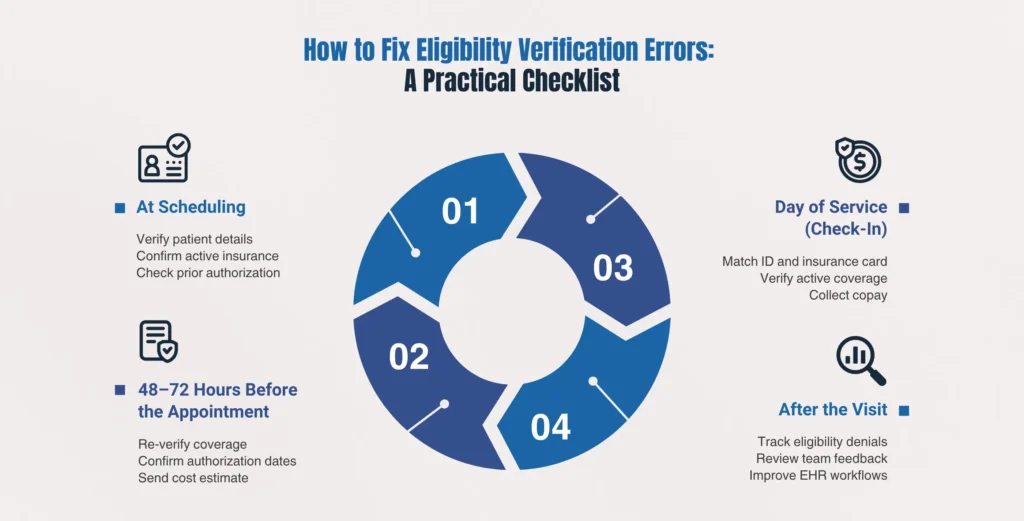
How to Fix Eligibility Verification Errors: A Practical Checklist
At Scheduling:
- Collect the patient's full legal name, date of birth, member ID, and group number
- Confirm the insurance plan is active and the provider is in-network
- Flag any services that require prior authorization
48–72 Hours Before the Appointment:
- Re-verify coverage, don't assume what was active at booking is still active
- Confirm authorization status and expiration dates
- Send the patient their estimated cost responsibility
Day of Service (Check-In):
- Match the insurance card with a government-issued photo ID
- Confirm active coverage for the date of service
- Collect copay before the visit, not after
After the Visit:
- Track eligibility-related denials by category (inactive plan, invalid ID, missing auth, out-of-network)
- Build a monthly feedback loop between the front desk and the billing teams
- Use denial data to refine intake scripts and EHR prompts
How MaxRemind Supports Cleaner Verification Workflows
MaxRemind’s billing solutions are designed to tackle this specific issue. MaxRemind assists practices in identifying eligibility mistakes prior to them resulting in revenue losses, offering precise patient registration, ongoing insurance verification support, and denial management.
Prepared to enhance your verification procedure?
- Why is insurance eligibility verification important in healthcare billing?
-
Insurance eligibility verification ensures that a patient's coverage is active and that services are covered before treatment is provided. Accurate verification helps prevent claim denials, reduces payment delays, and protects practice revenue.
- What are the most common eligibility verification errors?
-
Common errors include using outdated insurance information, entering incorrect member IDs or patient demographics, failing to verify coverage before the appointment, missing secondary insurance details, and overlooking prior authorization requirements.
- How often should insurance eligibility be verified?
-
Best practice is to verify insurance at scheduling, re-verify 48–72 hours before the appointment, and confirm coverage again at check-in. Coverage details can change between booking and the date of service.
- How do eligibility verification errors lead to revenue leakage?
-
When eligibility information is inaccurate or incomplete, claims may be denied, delayed, or underpaid. Practices then spend additional time and resources correcting and resubmitting claims, leading to lost revenue and increased administrative costs.
- How can healthcare practices reduce eligibility-related claim denials?
-
Practices can reduce denials by implementing standardized verification workflows, performing real-time eligibility checks, confirming authorization requirements, improving communication between front-desk and billing teams, and using automated verification tools like MaxRemind to streamline the process.
Transform Your
Practice with
AI-Powered EHR
Reduce administrative burden, streamline workflows, accelerate revenue, and deliver exceptional patient care.
- AI-Assisted Documentation
- HIPAA-Compliant Platform
- Faster Claims & Billing
- Specialty-Based Solutions