
Modifier Misuse: How Incorrect Modifiers Trigger Denials and Delays
Understanding Modifiers in Medical Billing
- A service was partially performed
- Multiple procedures were performed on the same day
- A procedure was distinct or unrelated to another service

Examples of Common Modifiers
| Modifier | Meaning | Example of Misuse |
|---|---|---|
|
25 |
Significant, separately identifiable E/M service |
Billing for routine E/M on the same day as a minor procedure without justification |
|
59 |
Distinct procedural service |
Using 59 to bypass payer rules, leading to denial |
|
76 |
Repeat the procedure by the same provider |
Incorrectly applied when the procedure is unrelated |
|
91 |
Repeat the lab test |
Applied without documentation of the necessity |
Common Modifier Mistakes That Cause Denials
-
Using Modifiers Without Proper Documentation
Payers require documentation to justify the modifier. For example, Modifier 25 needs clear documentation that a separate E/M service was medically necessary, apart from the procedure performed. -
Incorrect Modifier Selection
Choosing the wrong modifier can result in a claim denial. For instance, using Modifier 59 to indicate a distinct service without meeting the strict criteria will often be rejected by payers. -
Overusing Modifiers
Some coders add modifiers to multiple services without justification, hoping to avoid denials. This practice often backfires, as payers audit claims with excessive modifier use. -
Ignoring Payer-Specific Rules
Each insurance payer may have unique requirements for modifier usage. Failure to comply with payer-specific rules can trigger automatic denials. -
Inconsistent Coding Across Teams
Variations in coding practices within the same organization can lead to confusion and denials. A consistent internal coding policy is essential.
Common Modifier Errors and Their Impact on Claims
| Error Type | Description | Impact on Claims |
|---|---|---|
|
Documentation Missing |
No supporting notes for the modifier |
Denial or delayed payment |
|
Wrong Modifier |
Applied incorrectly |
Claim rejected or reduced payment |
|
Overuse of Modifiers |
Excessive modifier application |
Increased audits and denials |
|
Payer Non-Compliance |
Ignoring payer rules |
Automatic denials |
Payer-Specific Rules and Variations
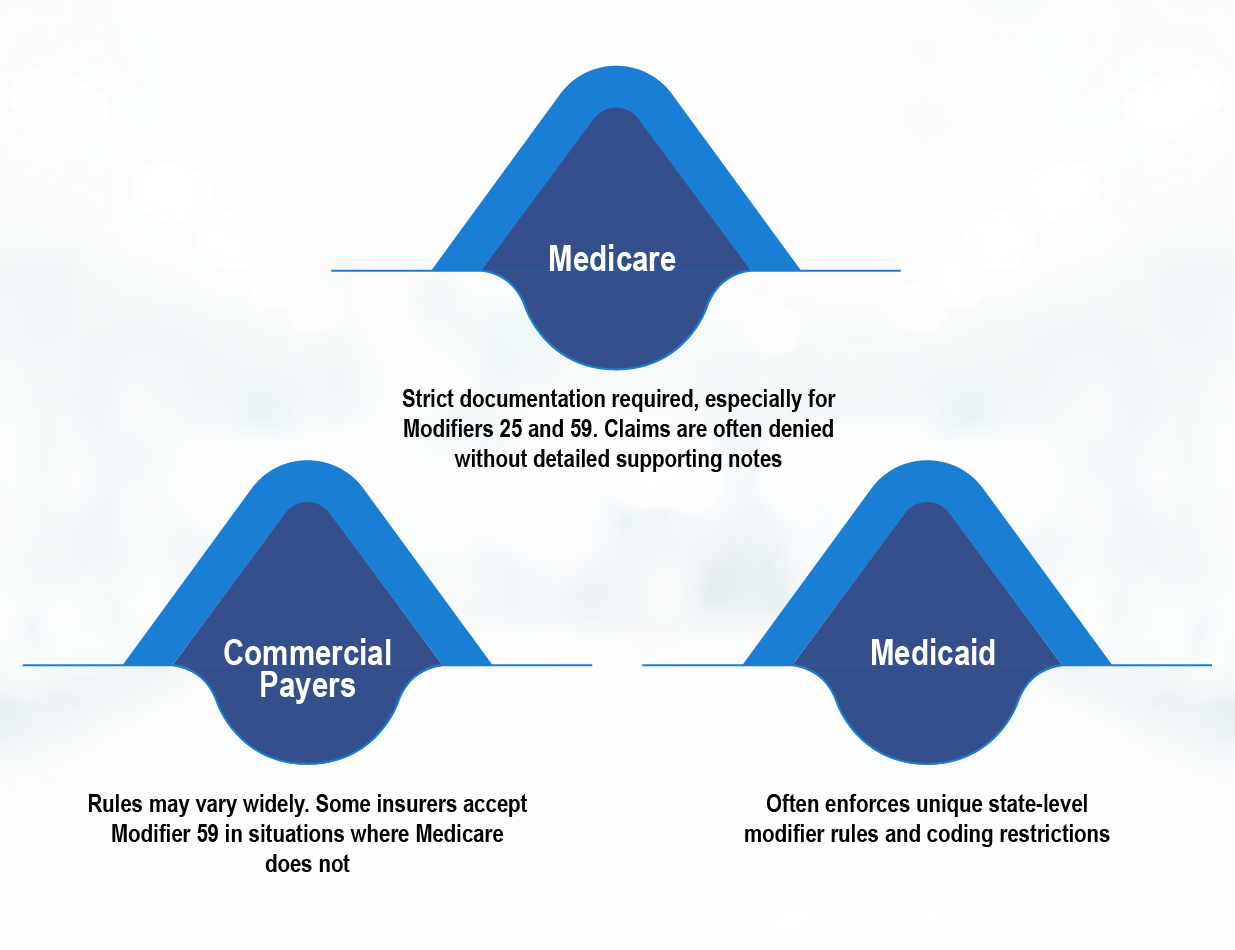
-
Medicare:
Strict documentation required, especially for Modifiers 25 and 59. Claims are often denied without detailed supporting notes. -
Commercial Payers:
Rules may vary widely. Some insurers accept Modifier 59 in situations where Medicare does not. -
Medicaid:
Often enforces unique state-level modifier rules and coding restrictions.
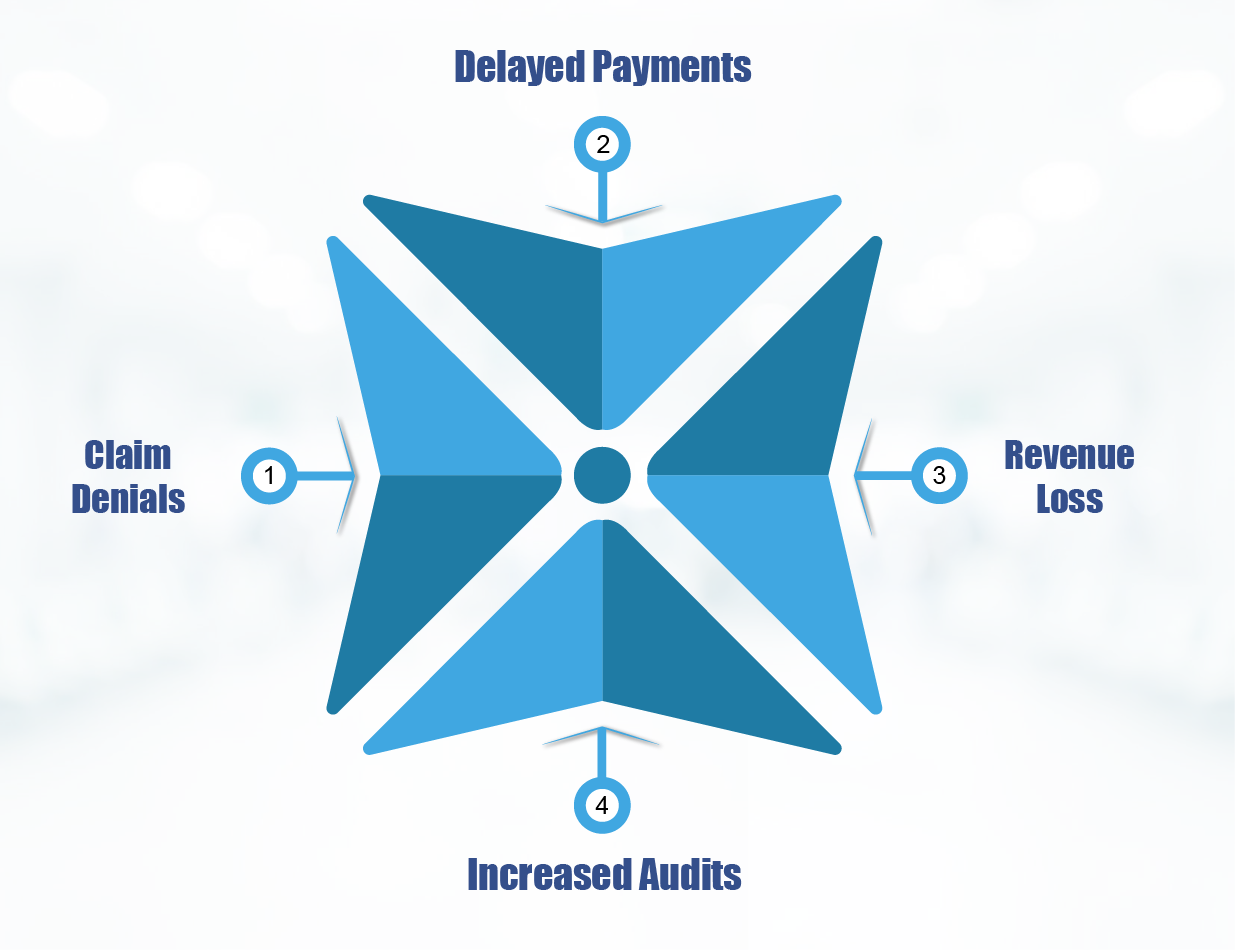
Impact of Modifier Misuse on Claims and Revenue
-
Claim Denials:
Payers reject claims outright, requiring resubmission. -
Delayed Payments:
Even corrected claims can take weeks to process. -
Revenue Loss:
Repeated denials increase administrative costs and reduce net revenue. -
Increased Audits:
Frequent errors can trigger audits, further straining resources.
Strategies to Prevent Modifier Errors
Preventing errors requires a proactive and structured approach. Key strategies include:
-
Regular Training for Coders
Coders should receive continuous education on modifier rules, payer updates, and best practices. -
Internal Audits and Quality Checks
Routine audits help identify incorrect modifier usage before claims are submitted. -
Use of Coding Software and Tools
Advanced coding software can flag potential errors and provide payer-specific guidance. -
Clear Documentation Policies
Providers must document services clearly, noting when procedures are distinct, separate, or repeated. -
Payer-Specific Guidelines
Maintain up-to-date reference guides for each payer to avoid non-compliance and reduce denials.
How Maxremind Helps Coders and Billing Teams
Maxremind specializes in reducing coding errors and improving billing efficiency. With Maxremind, healthcare organizations can:
- Access real-time payer-specific modifier rules
- Receive alerts for potential modifier misuse before claim submission
- Conduct internal audits efficiently
- Streamline training for coders with updated educational resources

Conclusion
Modifier misuse is one of the most common causes of claim denials and delayed payments in medical billing. By understanding common mistakes, payer-specific rules, and proactive prevention strategies, coders and billing managers can reduce errors, optimize claims, and protect revenue.
Maxremind offers a comprehensive solution for healthcare organizations, ensuring accurate coding, compliance with payer rules, and faster claim processing. Investing in proper training, tools, and audit practices today can save significant time, resources, and revenue tomorrow.
Want To Stop Denials Before They Happen?
- What is modifier misuse in medical billing?
-
Modifier misuse occurs when a CPT or HCPCS modifier is applied incorrectly, without proper documentation, or in violation of payer-specific rules. This can lead to claim denials, delayed payments, or reduced reimbursements.
- Which modifiers are most commonly misused?
-
Modifiers 25 (separate E/M service), 59 (distinct procedural service), 76 (repeat procedure), and 91 (repeat lab test) are among the most frequently misused modifiers, often causing claim denials if applied incorrectly.
- How does modifier misuse lead to claim denials?
-
Incorrect or undocumented modifiers create confusion for payers. Claims may be rejected outright, delayed for review, or paid at a lower rate, impacting revenue and increasing administrative workload.
- Are the modifier rules the same for all insurance payers?
-
No. Each payer, Medicare, Medicaid, and commercial insurers, may have specific rules for modifier usage. Coders must stay updated on payer-specific guidelines to avoid denials.
- How can Maxremind help prevent modifier-related denials?
-
Maxremind provides real-time guidance on modifier rules, flags potential errors before claim submission, and offers training and auditing tools for coders and billing teams. This helps reduce denials, streamline claims, and protect revenue.