EHR adoption among U.S. non-federal acute care hospitals has reached nearly universal levels, with more than 99 percent of hospitals having adopted a certified EHR system by 2024 – a more than tenfold increase since 2008, when fewer than 10 percent of hospitals operated fully electronic systems, according to a new data brief from the Office of the National Coordinator for Health Information Technology (ONC).
Adoption rates have remained consistently high since 2018, with little variation by hospital size, ownership, location, or critical access status – reflecting the broad success of federal health IT initiatives launched under the HITECH Act.
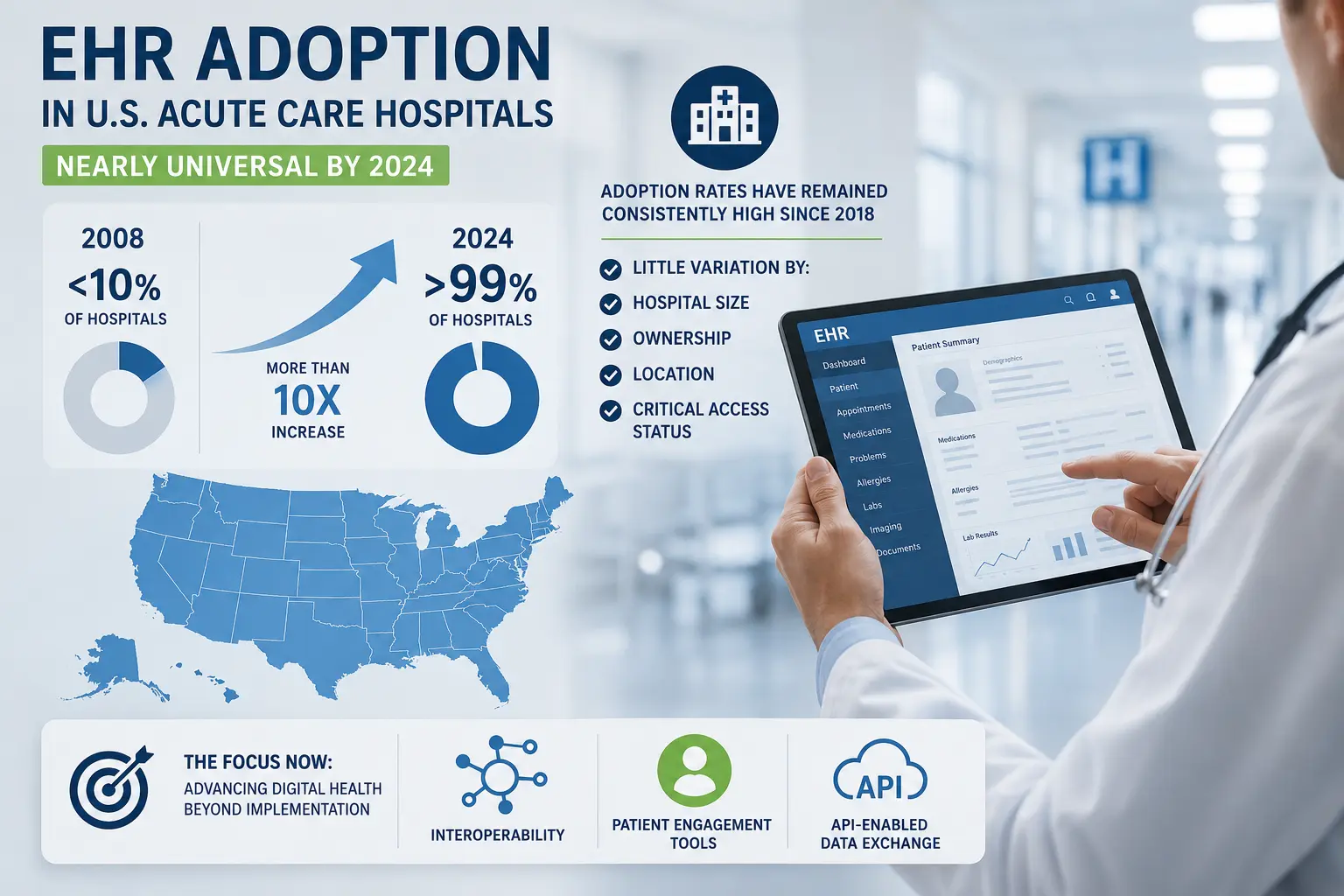
With implementation no longer the primary challenge, ONC is now shifting its focus toward advancing more sophisticated digital health capabilities, including interoperability, patient engagement tools, and API-enabled data exchange.
What This Means for Healthcare Organizations
Near-universal EHR adoption marks the end of one era and the start of another. The policy emphasis is moving from “do you have an EHR” to “how well is it working.” For providers and revenue cycle teams, this means increased scrutiny on interoperability, data sharing, and clinical workflow optimization – not just system presence. Organizations still running legacy or non-certified EHR systems should treat this milestone as a signal to accelerate their upgrade timelines.
Sources: ONC Data Brief, HC Innovation Group