CMS has issued a proposed rule that would require Exchanges to verify key eligibility criteria before providing financial assistance to consumers enrolling in coverage. The Exchange Pre-Eligibility Verification proposed rule (CMS-9873-P) aligns with the Working Families Tax Cuts (WFTC) legislation and targets long-standing gaps in how advance premium tax credits (APTC) and cost-sharing reductions (CSRs) are distributed during inconsistency periods.
Public comments are open for 30 days following publication in the Federal Register.
The Problem the Rule Is Solving
Under current ACA policy, when an Exchange cannot electronically verify a consumer’s eligibility information, the consumer enters an inconsistency period. During that time, financial assistance is provided anyway while the consumer is asked to submit documentation. If they never do, APTC and CSRs are eventually reduced or ended – but payments have already gone out.
The proposed rule flips that sequence. Verification comes first, financial assistance comes second.
What Would Be Verified Before Financial Assistance Is Provided
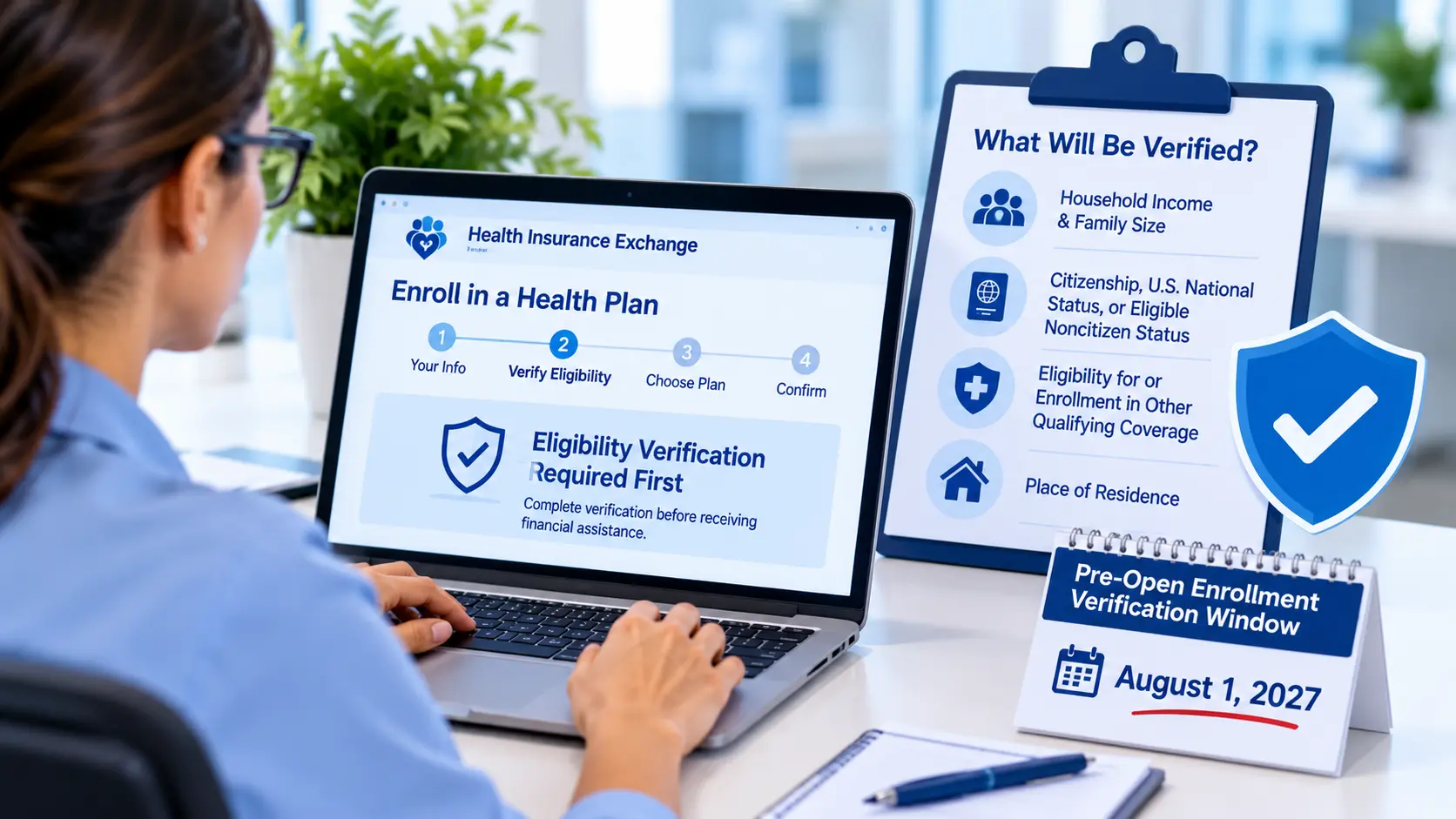
Under the proposed rule, Exchanges would be required to verify all four of the following before releasing financial assistance:
- Household income and family size
- Citizenship, U.S. national status, or eligible noncitizen status
- Eligibility for or enrollment in other qualifying coverage
- Place of residence
Consumers could still enroll in Exchange coverage during the inconsistency period – they just would not receive financial assistance until verification is complete.
Annual Re-Verification for Existing Enrollees
The rule also addresses auto-renewal. Currently enrolled consumers would only be automatically re-enrolled with financial assistance if they return to the Exchange to confirm and re-verify certain eligibility criteria annually. Enrollees who do not actively return would be auto-renewed without financial assistance. This closes a gap where enrollees receiving APTC may no longer qualify but continue to receive it through passive re-enrollment.
Pre-Open Enrollment Verification Window
Starting August 1, 2027, Exchanges would be required to offer a pre-Open Enrollment verification window each year. Consumers could submit eligibility information early – before OE begins — to ensure their verification is complete before the coverage year starts. This is designed to reduce disruptions and give consumers confirmed financial assistance from day one of coverage.
Contingent Plan Selection
The rule introduces a new enrollment option: contingent plan selection. Consumers could select a plan during OE or a Special Enrollment Period (SEP), with the plan becoming effective only if they are determined eligible for financial assistance. If financial assistance is later confirmed, enrollment would become effective retroactively for months already enrolled during the inconsistency period.
Exceptions and Flexibility
The proposed rule includes a waiver of verification requirements for certain SEPs triggered by life events – birth, adoption, marriage, or loss of a dependent. In those cases, financial assistance would be based on attested information during the inconsistency period. The rule also proposes giving Exchanges more flexibility on the timing of annual OE notifications, allowing outreach to go out before the pre-OE verification window rather than waiting for the month before OE.
Effective Date
The provisions would apply to eligibility determinations made for plan year 2028. The first pre-OE verification window would open August 1, 2027. Federal Register
What This Means for Healthcare Organizations
For health plans, brokers, navigators, and enrollment assisters, this rule changes the enrollment workflow in a meaningful way. Financial assistance will no longer flow during unresolved inconsistency periods, which means consumers who do not complete verification on time will lose APTC – and may drop coverage or switch plans. Expect increased volume of outreach and verification support requests during the new pre-OE window starting August 2027.

Revenue cycle teams at organizations that serve a high proportion of Exchange-covered patients should watch enrollment trends closely as this rule takes effect. Any drop in APTC continuity during the transition to plan year 2028 could shift payer mix and affect reimbursement. Organizations should also review patient communication workflows to help enrollees complete verification on time.
Sources: CMS Fact Sheet, CMS Press Release, Federal Register