A new survey from the American Medical Association (AMA) finds that only one in three physicians believe last year’s insurer pledge to reform prior authorization will produce meaningful change — a finding that reflects years of similar commitments that have failed to deliver lasting improvements.
In June 2025, roughly 60 health insurers pledged to streamline, simplify, and reduce prior authorization requirements, with implementation deadlines spanning 2025 through 2027. The AMA surveyed 1,000 practicing physicians ahead of the first major deadline to gauge whether those commitments are translating into real-world impact.
“Physician trust in voluntary insurer pledges is deeply eroded after years of unfulfilled promises,” said AMA President Bobby Mukkamala, M.D. “Rebuilding trust will require sustained, transparent, and measurable action to streamline prior authorization and keep it clinically focused and patient-centered.”
Key Survey Findings
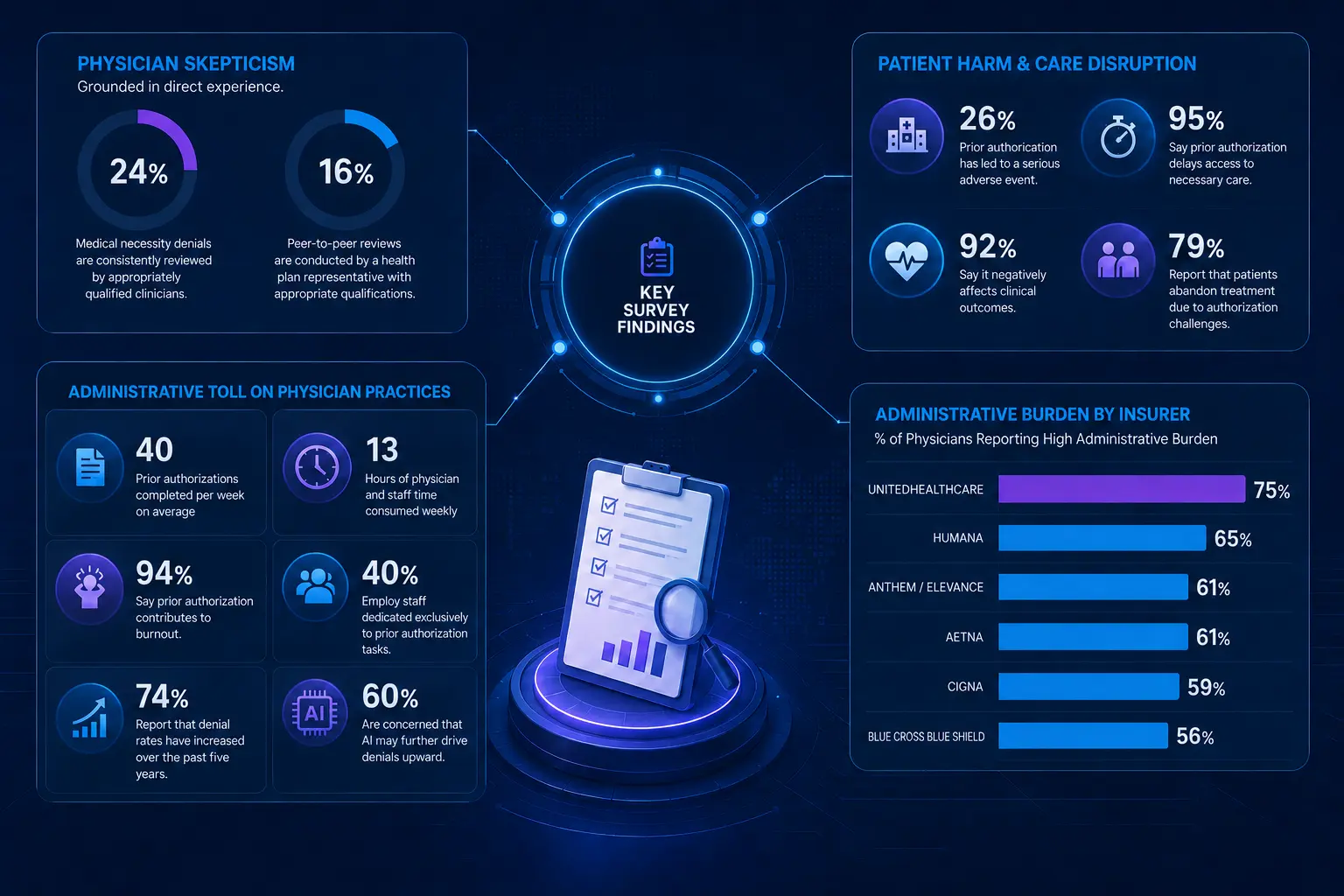
Physician skepticism is grounded in direct experience. Only one in four physicians (24%) report that medical necessity denials are consistently reviewed by appropriately qualified clinicians, and just 16% say peer-to-peer reviews are conducted by a health plan representative with appropriate qualifications.
The data also documents widespread patient harm and care disruption:
- More than one in four physicians (26%) report that prior authorization has led to a serious adverse event, including hospitalization, permanent impairment, or death.
- 95% say prior authorization delays access to necessary care, and 92% say it negatively affects clinical outcomes.
- Nearly four in five physicians (79%) report that patients abandon treatment due to authorization challenges.
The administrative toll on physician practices is equally significant:
- Physicians complete an average of 40 prior authorizations per week, consuming roughly 13 hours of physician and staff time.
- 94% say prior authorization contributes to burnout, and 40% employ staff dedicated exclusively to managing prior authorization tasks.
- 74% report that denial rates have increased over the past five years, and six in 10 are concerned that AI may further drive denials upward.
On overall administrative burden, UnitedHealthcare ranks highest among major insurers at 75%, followed by Humana (65%), Anthem/Elevance (61%), Aetna (61%), Cigna (59%), and Blue Cross Blue Shield (56%).
What This Means for Healthcare Organizations
The AMA’s findings reinforce what revenue cycle teams already know on the ground: voluntary insurer pledges have not meaningfully reduced the prior authorization burden on providers. With denial rates rising, peer review quality inconsistent, and AI-driven denials a growing concern, practices should not scale back their prior authorization management infrastructure in anticipation of insurer-led reform.
Revenue cycle teams should continue investing in dedicated prior authorization workflows, denial tracking, and appeal processes.

Organizations managing high prior authorization volumes should also monitor CMS and congressional activity for any binding regulatory changes that could create enforceable reform where voluntary pledges have fallen short.