
How to Build an Internal Billing Compliance Program Without a Compliance Officer
Why Billing Compliance Matters for Small Practices

Common Compliance Challenges Without a Compliance Officer
- Limited time and staff capacity to focus on compliance
- Lack of standardized billing and documentation workflows
- Inconsistent coding practices across team members
- Reactive approach to audits instead of proactive preparation
- Difficulty keeping up with changing CMS and payer guidelines

The Core Elements of a Lean Billing Compliance Program
A successful compliance program doesn’t need to be complex; it just needs to be consistent and clearly defined. Even without a compliance officer, your practice should build around a few core elements.

Step-by-Step: Building Your Internal Compliance System
Step 1: Define Ownership (Even Without a Compliance Officer)
Every compliance program needs accountability. In small practices, this responsibility can be assigned to an existing team member such as a practice manager or billing lead. This person doesn’t need to be an expert but should be responsible for overseeing compliance activities, monitoring updates, and ensuring processes are followed consistently.
Step 2: Standardize Your Billing Workflow
Step 3: Build a Simple Internal Audit Routine
- Reviewing a small sample of claims regularly
- Checking coding accuracy and documentation completeness
- Identifying patterns in errors or denials
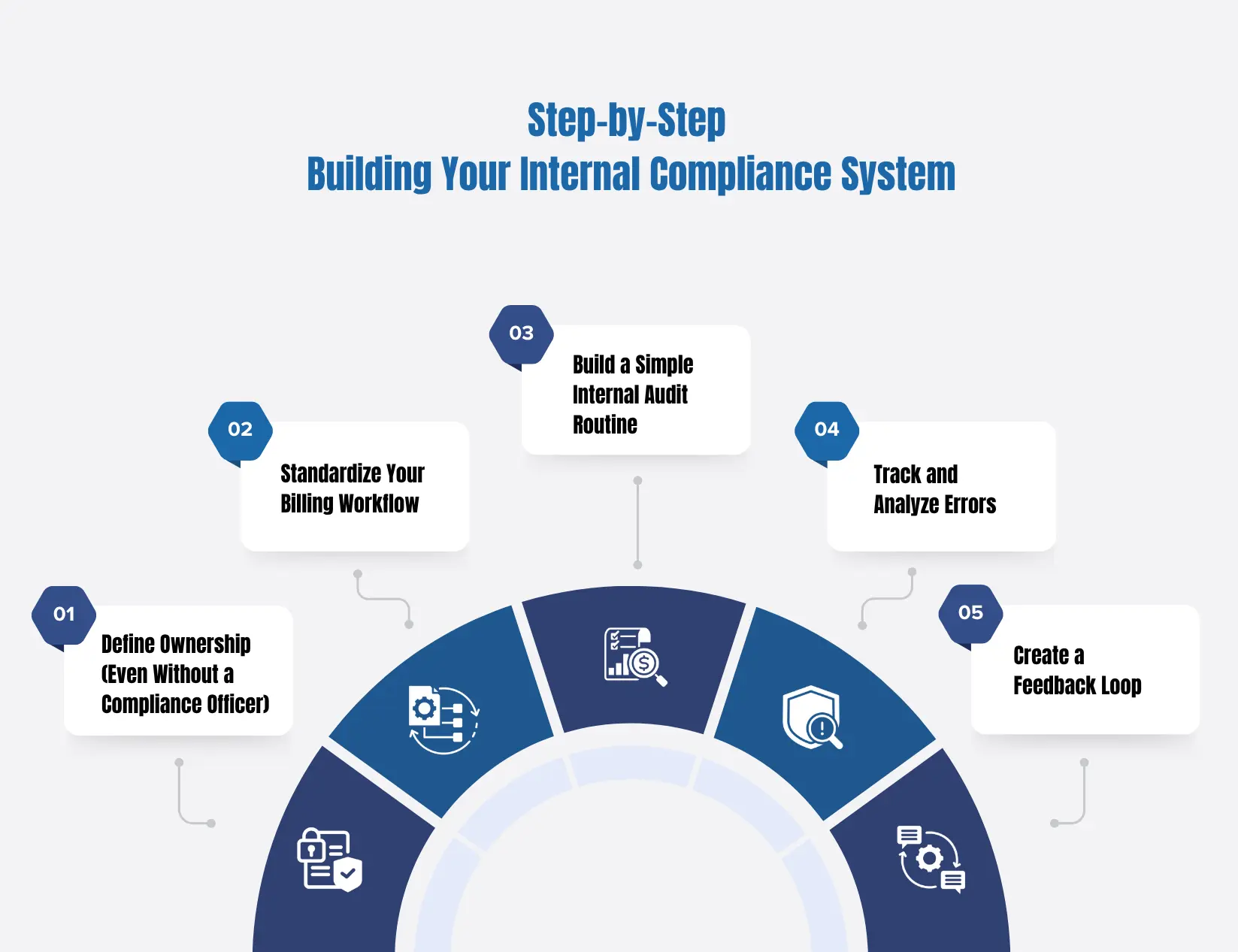
Step 4: Track and Analyze Errors
Step 5: Create a Feedback Loop
Essential Billing Compliance Checklist
| Compliance Area | Key Actions | Frequency |
|---|---|---|
|
Patient Information |
Verify demographics and insurance details |
Every visit |
|
Coding Accuracy |
Ensure correct CPT and ICD-10 codes |
Every claim |
|
Documentation |
Complete and accurate clinical notes |
Every encounter |
|
Claim Review |
Pre-submission validation |
Daily |
|
Internal Audits |
Random claim reviews |
Weekly/Monthly |
|
Denial Tracking |
Monitor and categorize denials |
Ongoing |
|
Staff Training |
Update on compliance and coding changes |
Quarterly |
How Technology Simplifies Compliance for Small Practices
For small practices, manual processes often increase the risk of errors and inconsistencies. This is where the right technology can transform your compliance efforts. Instead of relying on multiple disconnected tools, an integrated platform like MaxRemind helps streamline workflows and embed compliance directly into your daily operations.
| Feature | Compliance Benefit |
|---|---|
|
Automated Coding Assistance |
Reduces coding errors and improves accuracy |
|
Built-in Documentation Templates |
Ensures complete and consistent clinical records |
|
Audit Trails |
Maintains a clear history for compliance verification |
|
Claim Scrubbing Tools |
Identifies errors before submission |
|
Real-Time Alerts |
Flags missing or incorrect information instantly |
|
Reporting & Analytics |
Tracks compliance trends and denial patterns |
Common Mistakes to Avoid
- Treating compliance as a one-time setup instead of an ongoing process
- Creating overly complex workflows that staff cannot consistently follow
- Ignoring small errors that may indicate larger systemic issues
- Failing to maintain complete and accurate documentation
- Relying entirely on manual processes without leveraging technology

Conclusion
The key is to focus on simplicity, consistency, and accountability. By standardizing workflows, conducting regular audits, and using technology to reduce manual effort, your practice can stay compliant without increasing overhead.
Are You Ready to Simplify Compliance?
If your practice is looking for a more efficient way to manage billing compliance, MaxRemind offers an all-in-one solution designed for growing healthcare providers. With built-in compliance tools, automated checks, and real-time insights, it helps you reduce risk, improve accuracy, and stay audit-ready, without the need for a dedicated compliance officer.
Simplify Compliance Without Extra Overhead
- Do small medical practices really need a billing compliance program?
-
Yes, even small practices are required to follow strict billing and documentation regulations. A billing compliance program helps reduce claim denials, avoid audits, and ensure accurate reimbursements. Without one, even minor errors can lead to financial losses or penalties.
- Can a practice stay compliant without hiring a compliance officer?
-
Absolutely. Small practices can maintain compliance by implementing structured workflows, conducting regular internal audits, and using technology like MaxRemind to automate billing checks, track errors, and ensure accurate documentation.
- What are the most common billing compliance risks for small practices?
-
The most common risks include incorrect coding, incomplete documentation, lack of claim review processes, and failure to track denials. These issues often arise due to limited staff and a lack of standardized workflows.
- How often should a small practice perform internal billing audits?
-
Small practices should conduct internal audits on a weekly or monthly basis, depending on claim volume. Even reviewing a small sample of claims regularly can help identify errors early and prevent larger compliance issues.
- How can technology help improve billing compliance in small practices?
-
Technology plays a critical role by automating repetitive tasks and reducing human error. Solutions like MaxRemind provide features such as claim scrubbing, real-time alerts, and reporting tools that help practices stay compliant, improve accuracy, and streamline their revenue cycle.