

Automation Fatigue in Billing Teams: How to Implement Tech Without Disruption
Instead of streamlined workflows, teams are navigating multiple disconnected tools. Instead of saving time, they’re spending more time managing systems. And instead of clarity, there’s confusion.
This growing disconnect has a name: automation fatigue in healthcare billing.
What Is Automation Fatigue in Healthcare Billing?
- Increased reliance on multiple disconnected platforms
- Staff frustration with complex or unintuitive systems
- Duplicate data entry across tools
- Declining productivity despite “automation”
- Resistance to new technology implementations

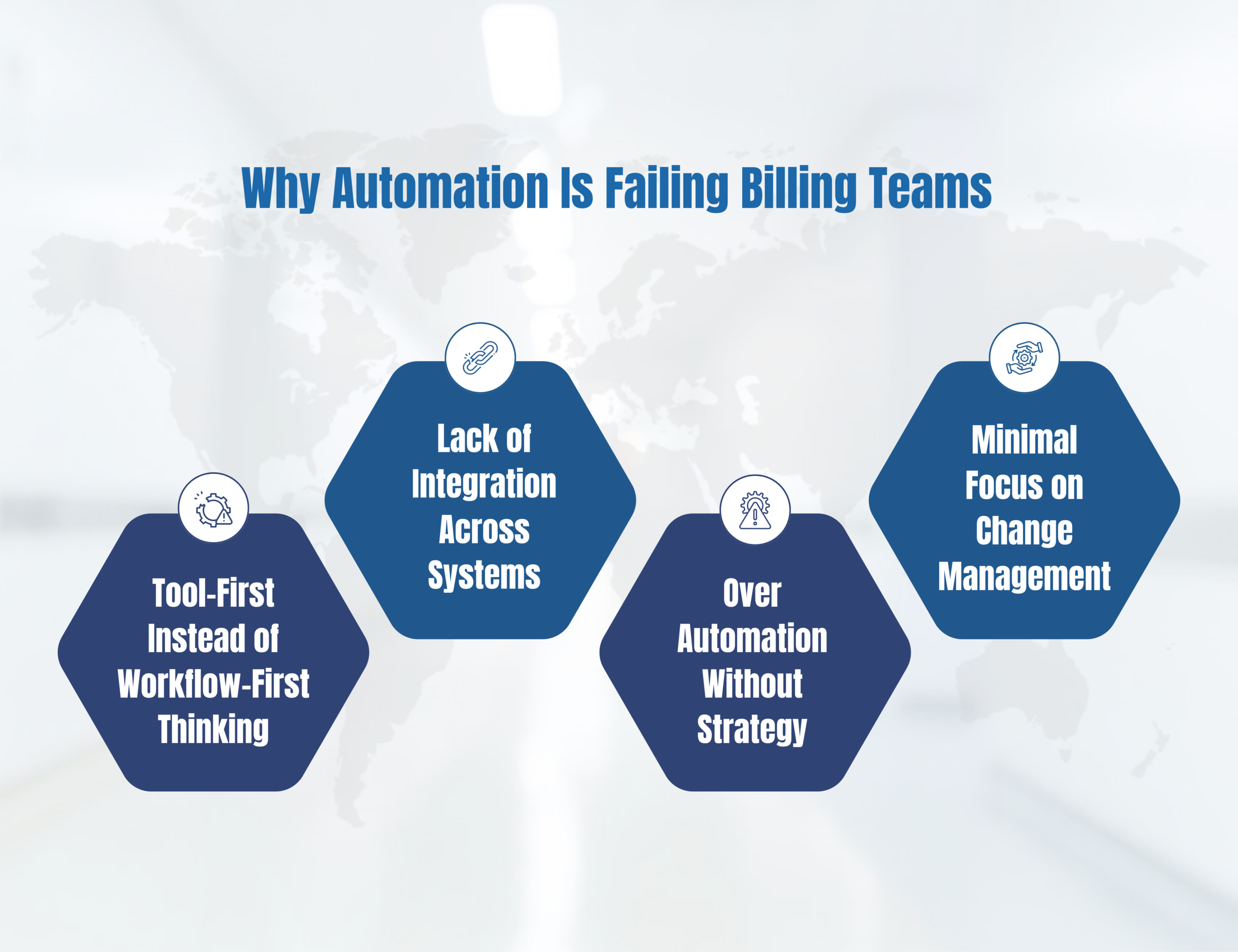
Why Automation Is Failing Billing Teams
-
Tool-First Instead of Workflow-First Thinking
Organizations often adopt tools based on features rather than actual workflow needs. This leads to systems that don’t align with how billing teams operate daily. -
Lack of Integration Across Systems
Disconnected tools create silos. When billing, coding, and documentation systems don’t communicate effectively, automation becomes fragmented rather than efficient. -
Over-Automation Without Strategy
Not every process needs to be automated. Over-automating complex or exception-heavy workflows can create more errors and rework. -
Minimal Focus on Change Management
Technology adoption is as much about people as it is about systems. Without proper onboarding, training, and communication, even the best tools fail.
The Hidden Cost of Poor Implementation
| Challenge | Impact on Billing Teams | Business Outcome |
|---|---|---|
|
Multiple disconnected tools |
Increased manual reconciliation |
Slower collections |
|
Poor user experience |
Higher error rates |
More claim denials |
|
Lack of training |
Low adoption rates |
Wasted investment |
|
Workflow misalignment |
Process inefficiencies |
Revenue leakage |
A Smarter Approach: Workflow-First Automation
- Designing automation around existing workflows (not the other way around)
- Prioritizing integration between systems
- Automating only where it adds clear value
- Ensuring visibility and control at every stage
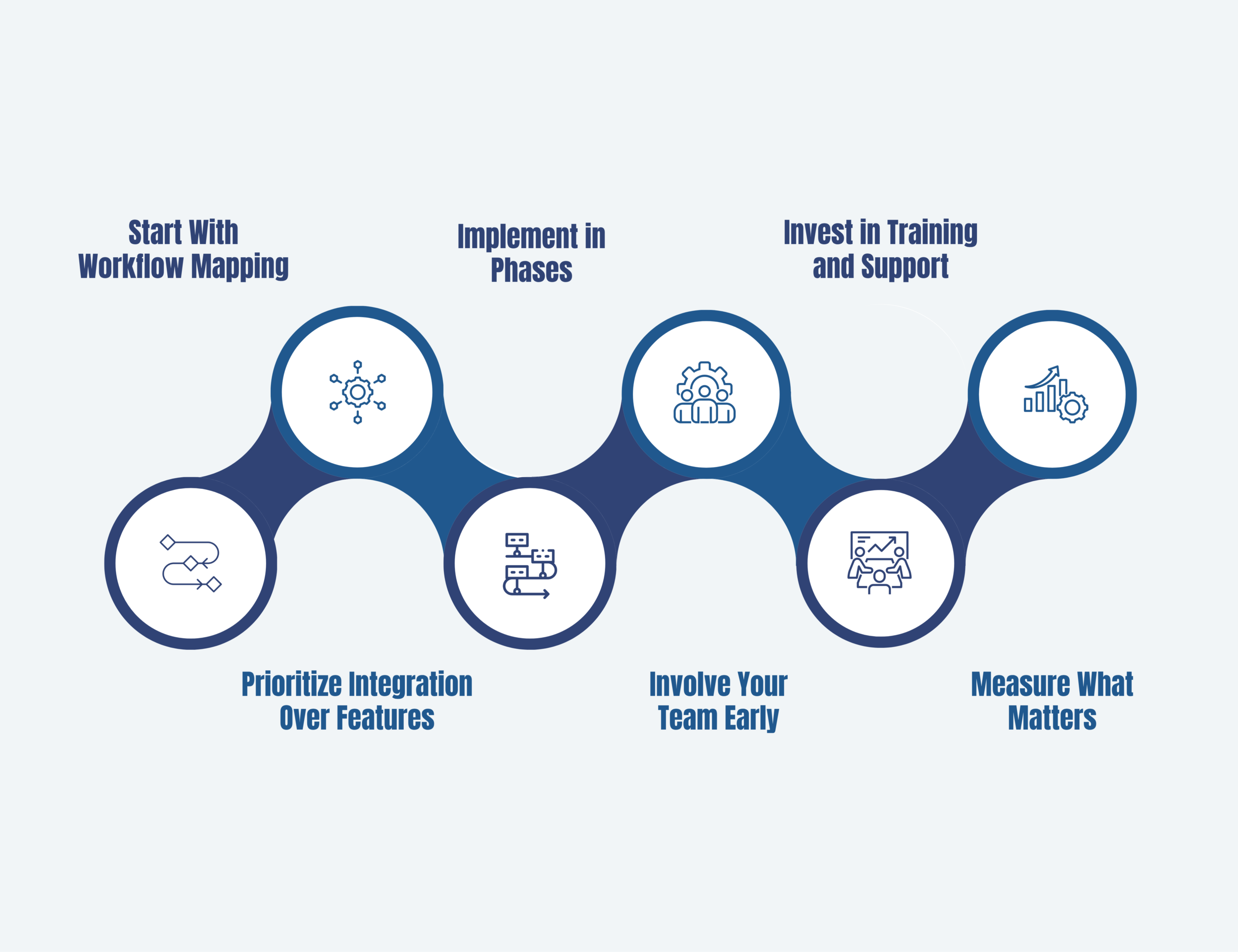
How to Implement Billing Automation Without Disruption
Successful automation in healthcare billing isn’t about doing more; it’s about doing it right. Here’s a structured approach billing leaders can follow:
Start With Workflow Mapping
- Where are the bottlenecks?
- Which tasks are repetitive vs. complex?
- Where do errors typically occur?
Prioritize Integration Over Features
- EHR and billing systems
- Coding and documentation workflows
- Claims and payment tracking
Implement in Phases
| Phase | Focus Area | Goal |
|---|---|---|
|
Phase 1 |
High-volume repetitive tasks |
Quick efficiency wins |
|
Phase 2 |
Workflow optimization |
Reduce bottlenecks |
|
Phase 3 |
Advanced automation |
Improve accuracy and insights |
Involve Your Team Early
- Gather feedback before implementation
- Include them in testing and decision-making
- Address concerns proactively
When teams feel involved, resistance decreases significantly.
Invest in Training and Support
- Real-world workflows (not just features)
- Role-specific usage
- Continuous learning and updates
Measure What Matters
- Reduction in claim denials
- Time saved per task
- Improvement in collections
- User adoption rates
The Role of Leadership in Managing Change
- Setting realistic expectations
- Communicating the “why” behind changes
- Creating a culture of adaptability
- Supporting teams through the transition

Turning Automation Into a Competitive Advantage
- Reduce administrative burden without overwhelming staff
- Improve revenue cycle efficiency
- Enhance team satisfaction and retention
- Gain better visibility into financial performance
Conclusion: Automation That Actually Works
This is where the right platform makes all the difference.
Instead of adding another layer of complexity, solutions like MaxRemind are designed to bring everything together, combining EHR, billing, and workflow automation into a single, integrated ecosystem. The focus isn’t just on automation, but on making automation work for your team, not against it.
Make Automation Work for Your Billing Team
- What is automation fatigue in healthcare billing?
-
Automation fatigue in healthcare billing occurs when teams become overwhelmed by too many tools, complex systems, or poorly implemented automation. Instead of improving efficiency, it leads to confusion, increased manual work, and lower productivity due to disconnected workflows and a lack of usability.
- Why does automation fail in billing and revenue cycle management?
-
Automation often fails because it is implemented without aligning with real billing workflows. Common reasons include lack of system integration, over-automation of complex tasks, insufficient staff training, and poor change management. When technology is introduced without considering the end users, adoption and efficiency both suffer.
- How can billing teams implement automation without disruption?
-
Billing teams can implement automation successfully by taking a phased, workflow-first approach. This includes mapping existing processes, prioritizing integrated solutions, involving staff early, and providing proper training. Gradual implementation helps reduce resistance and ensures smoother adoption.
- What are the benefits of automation in healthcare billing when done right?
-
When implemented effectively, automation can reduce administrative workload, improve claim accuracy, speed up reimbursements, and enhance overall revenue cycle efficiency. It also allows billing teams to focus on higher-value tasks instead of repetitive manual processes.
- How do you reduce staff resistance to new billing technology?
-
Reducing resistance starts with clear communication and involvement. Billing leaders should explain the purpose behind automation, involve teams in decision-making, and provide hands-on training. Choosing user-friendly, integrated systems also plays a key role in improving adoption and minimizing frustration.