
What Happens When a Provider Isn’t Properly Enrolled (and How to Fix It)
Understanding Provider Enrollment
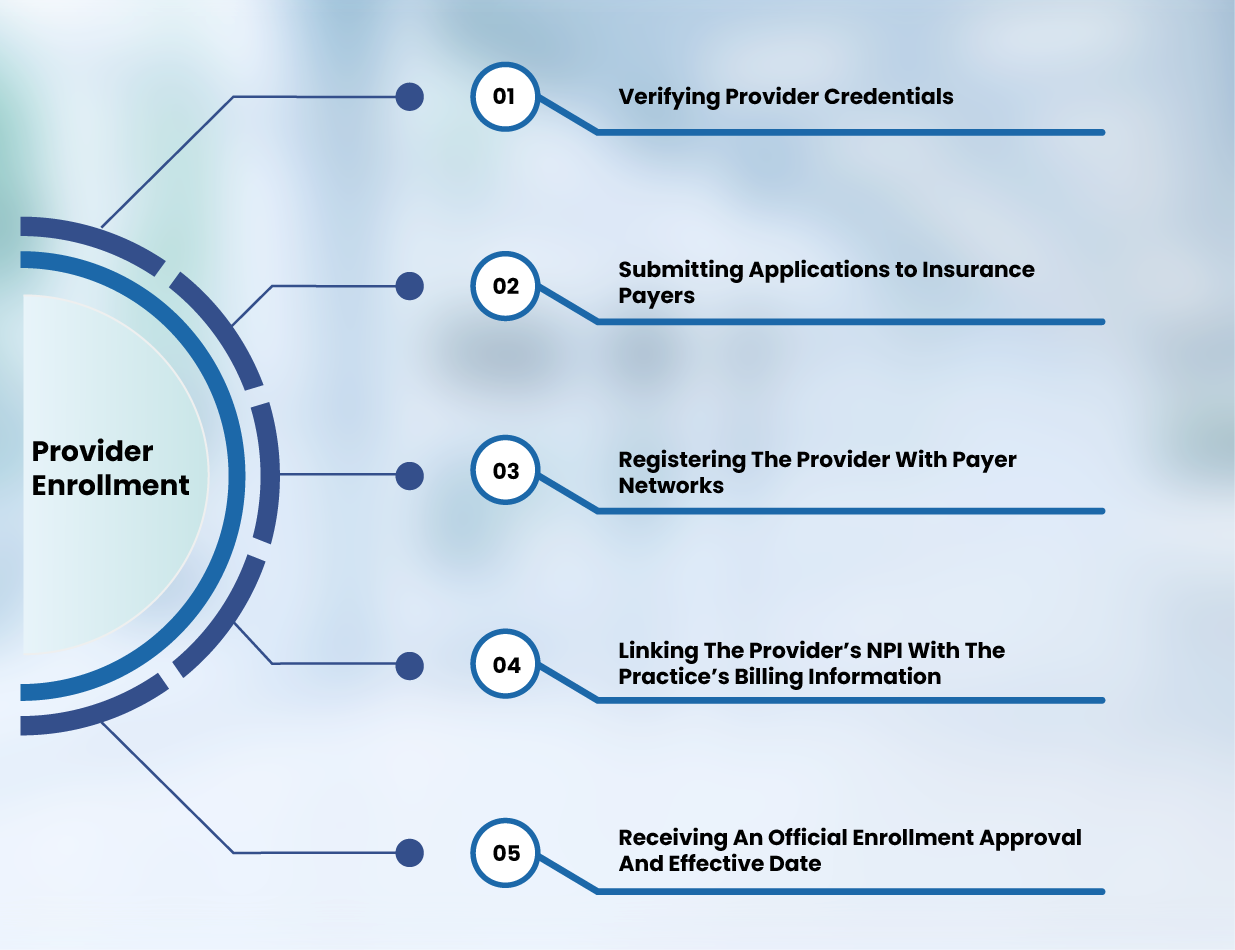
- Verifying provider credentials
- Submitting applications to insurance payers
- Registering the provider with payer networks
- Linking the provider’s NPI with the practice’s billing information
- Receiving an official enrollment approval and effective date
What Happens When a Provider Isn’t Properly Enrolled
Common outcomes include:
- Claims Denied Due To “Provider Not Enrolled.”
- Rejections Stating The Provider Is Not Recognized By The Payer
- Payment Delays While The Enrollment Status Is Verified
- Claims Returned For Correction Or Resubmission
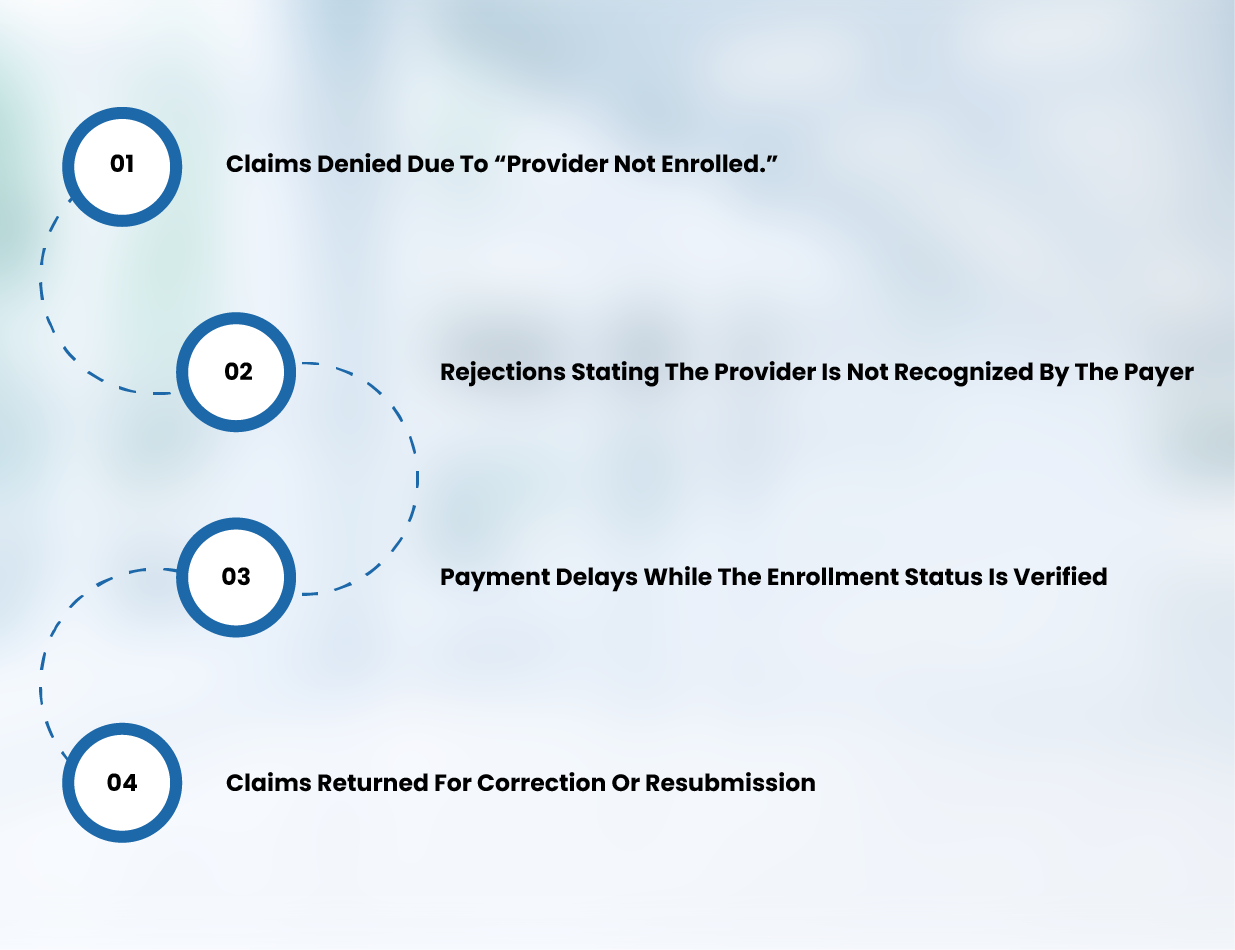
In many cases, claims submitted before enrollment approval will not be processed until the provider becomes active in the payer’s network. Even then, reimbursement is not always guaranteed.
Why Retro Billing Becomes a Major Risk
| Scenario | Possible Outcome |
|---|---|
|
Provider not enrolled at time of service |
Claim denial or rejection |
|
Enrollment approved after services |
Retro billing may be limited or denied |
|
Provider linked to incorrect group |
Claims returned for correction |
|
Enrollment application incomplete |
Delayed approval and delayed payments |
Common Reasons Providers Are Not Properly Enrolled
-
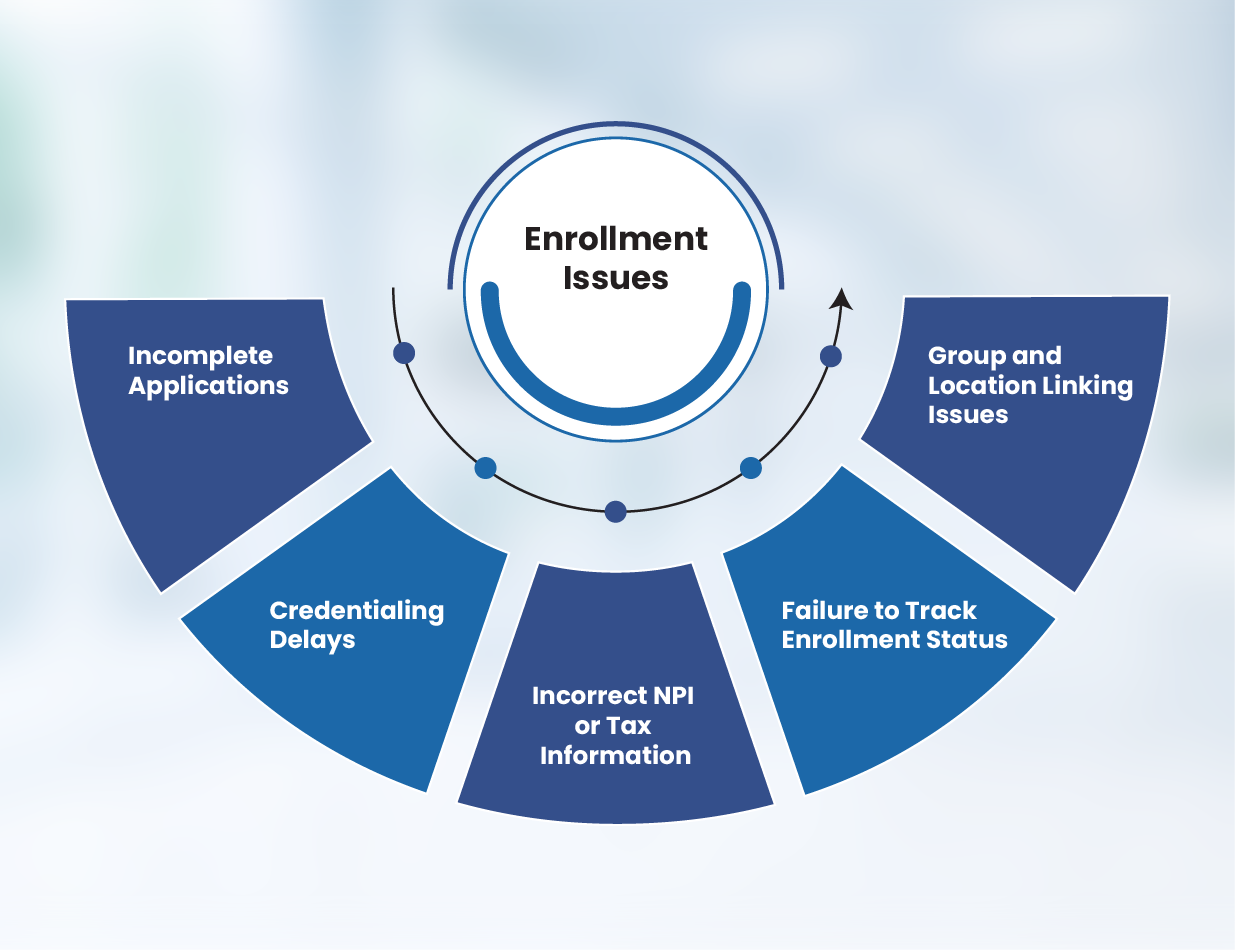
Incomplete Applications
Enrollment forms require detailed information about the provider, practice location, tax identification numbers, and licensing details. Missing or incorrect information can cause applications to be rejected or delayed. -
Credentialing Delays
Provider credentialing and payer enrollment are closely related but separate processes. If credentialing is not completed on time, enrollment approval may also be delayed. -
Incorrect NPI or Tax Information
Claims may be denied if the provider’s National Provider Identifier (NPI) is not properly linked to the practice’s billing entity. -
Failure to Track Enrollment Status
Some practices submit applications but fail to monitor enrollment progress. Without regular follow-ups, payer approvals may take longer than expected. -
Group and Location Linking Issues
Providers must often be linked to a specific practice location or group contract within the payer’s system. If this linkage is missing, claims may still be rejected even after enrollment approval.
How to Fix Provider Enrollment Issues
When billing teams start seeing “provider not enrolled” denials, immediate action is necessary to prevent further revenue loss. The first step is verifying the provider’s enrollment status with each payer. This can usually be done through payer portals or by contacting provider relations departments.
| Steps | Action |
|---|---|
|
Step 1 |
Confirm whether the provider is enrolled with the payer |
|
Step 2 |
Check the enrollment effective date |
|
Step 3 |
Identify claims submitted before the effective date |
|
Step 4 |
Contact the payer to verify retro billing eligibility |
|
Step 5 |
Correct enrollment errors and resubmit claims if allowed |
Best Practices to Prevent Enrollment-Related Denials
How MaxRemind Helps Practices Prevent Enrollment Errors
MaxRemind helps healthcare practices streamline credentialing, payer enrollment, and billing operations to prevent costly enrollment errors. By managing enrollment workflows and monitoring application progress, MaxRemind ensures that providers are properly activated before claims are submitted.
Conclusion
Avoid Enrollment Errors. Protect Your Revenue
- What does “provider not enrolled” mean in medical billing?
-
In medical billing, “provider not enrolled” refers to a situation where a healthcare provider has not been officially registered or approved by an insurance payer at the time services were rendered. This means the payer does not recognize the provider as eligible to bill under their network, which typically results in claim rejections or denials. Without proper enrollment, even correctly coded and documented claims cannot be processed for reimbursement.
- Can you bill insurance before provider enrollment is approved?
-
Billing insurance before a provider’s enrollment is approved is generally not recommended because it carries a high risk of claim denials. While some insurance companies may allow retroactive billing under specific conditions, many only reimburse services provided on or after the official enrollment effective date. Submitting claims before approval often leads to delays, rework, or complete loss of reimbursement if retro-billing is not permitted.
- What is retro billing in provider enrollment?
-
Retro billing in provider enrollment refers to the process of submitting claims for services that were performed before the provider’s official enrollment effective date with an insurance payer. This practice depends heavily on payer policies, as some insurers allow limited retroactive reimbursement if the enrollment application was already in progress, while others strictly deny claims for services rendered before approval. Because of these variations, retro billing is considered a financial risk for healthcare practices.
- How do you fix “provider not enrolled” claim denials?
-
Fixing “provider not enrolled” claim denials begins with verifying whether the provider is enrolled with the payer and confirming the effective date of that enrollment. Once the issue is identified, billing teams need to determine whether the denied claims fall outside the eligible billing window and check if the payer allows retroactive billing. If corrections are possible, claims can be updated and resubmitted; otherwise, alternative actions such as adjustments or write-offs may be required, depending on payer guidelines.
- How can practices prevent provider enrollment-related claim denials?
-
Practices can prevent provider enrollment-related claim denials by implementing a proactive and well-coordinated process between credentialing and billing teams. This includes initiating enrollment applications well in advance of a provider’s start date, closely tracking application progress, and verifying enrollment effective dates before submitting any claims. Ensuring clear internal communication and maintaining accurate provider records significantly reduces the chances of billing errors and helps protect the practice’s revenue cycle.