RCM Bottlenecks Most Practices Ignore (Until Cash Flow Suffers)

Introduction: The Silent Revenue Leak

For many practice managers, the warning signs start subtly. Accounts receivable (AR) days slowly increase. Denial rates creep upward. Patient collections become inconsistent. Yet patient volume remains stable, or even grows.
On paper, the numbers should work. In reality, cash flow tightens.

This disconnect often points to something far more dangerous than low patient volume: hidden revenue cycle management (RCM) bottlenecks. These are operational gaps embedded within everyday workflows, small inefficiencies that quietly disrupt reimbursement timelines and strain financial performance.

The most concerning part? Most practices don’t recognize them until cash flow begins to suffer.

Why Patient Volume Doesn’t Always Equal Revenue Growth

It’s a common assumption in healthcare operations: more patients mean more revenue. But revenue cycle performance depends less on volume and more on efficiency.
When revenue cycle inefficiencies exist, increased patient volume can actually amplify financial strain. More encounters mean more eligibility checks, more claims submissions, more coding accuracy demands, and more follow-ups. If systems are fragmented or manual, every additional patient multiplies the operational pressure.
Practice managers often focus on production metrics – appointments, procedures, provider utilization – while overlooking the structural workflows that convert services into collected revenue.
Revenue leakage doesn’t usually happen in dramatic events. It happens through:
  • Incorrect eligibility verification
  • Delayed claim submissions
  • Coding inconsistencies
  • Poor denial follow-up
  • Weak patient collection processes
Individually, each issue seems manageable. Collectively, they disrupt cash flow stability.
Why Patient Volume Doesn’t Always Equal Revenue Growth

Front-End Gaps That Start the Revenue Cycle Wrong

The revenue cycle begins long before a claim is submitted. It starts at the front desk. Insurance verification errors, incomplete patient demographics, and missed prior authorizations create claim vulnerabilities from the very beginning. These front-end mistakes are among the most overlooked RCM bottlenecks.
When eligibility is not verified accurately, claims are either denied or underpaid. When prior authorizations are missed, reimbursement delays extend by weeks. When copay collection is inconsistent, patient AR increases.
Because these errors happen before billing teams get involved, they often go unnoticed until denial reports reflect the damage.
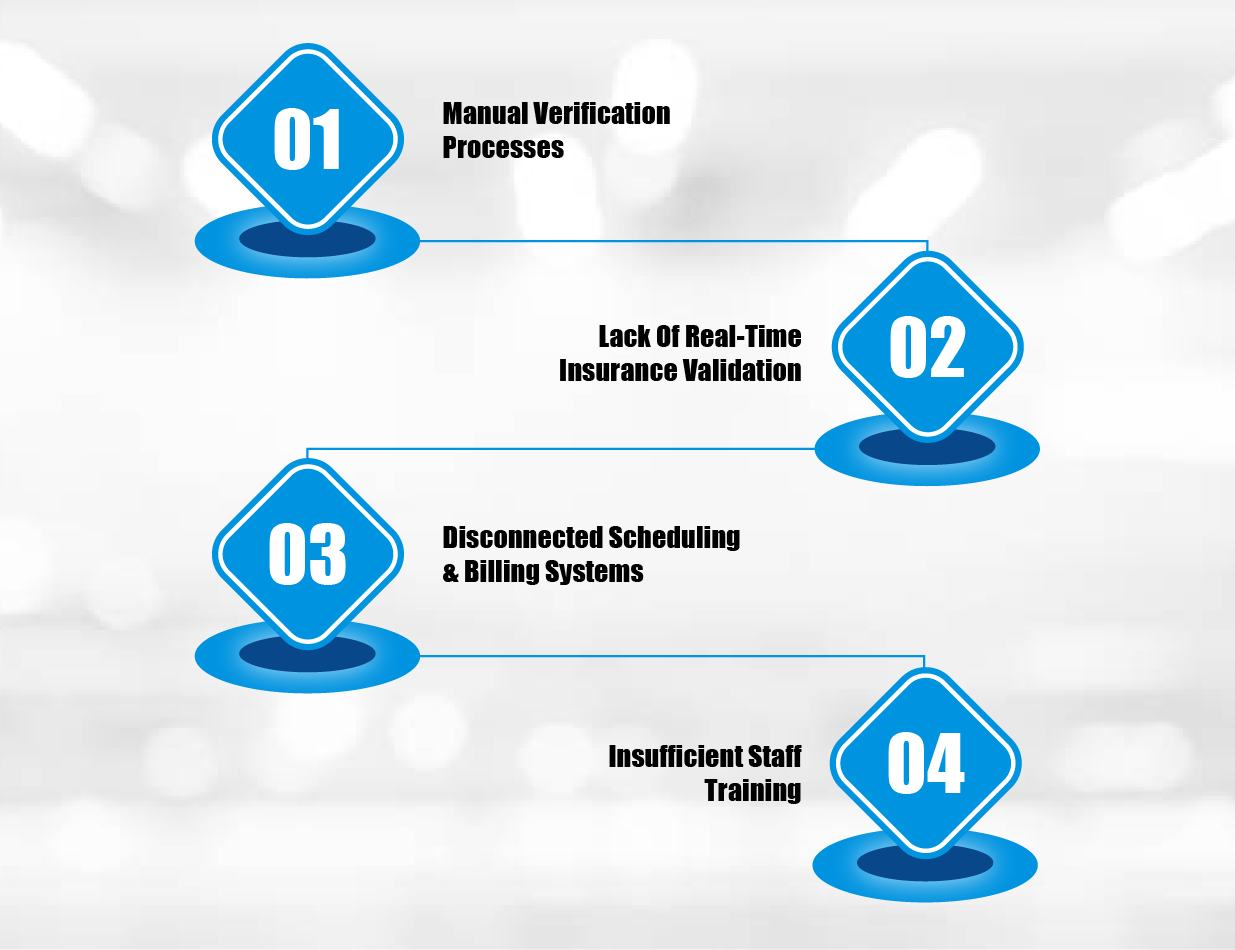
Front-end operational gaps frequently stem from:
  • Manual verification processes
  • Lack of real-time insurance validation
  • Disconnected scheduling and billing systems
  • Insufficient staff training
Without automation and integrated workflows, these early-stage errors cascade into downstream financial issues.
Front-End Gaps That Start the Revenue Cycle Wrong

Mid-Cycle Workflow Breakdowns That Delay Payments

Once services are delivered, documentation and coding become the next critical stage. This mid-cycle phase is where many practices unknowingly compromise their clean claim rate.
Incomplete documentation, delayed chart closures, and inconsistent coding practices extend claim submission timelines. The longer a claim waits to be submitted, the longer reimbursement is delayed.
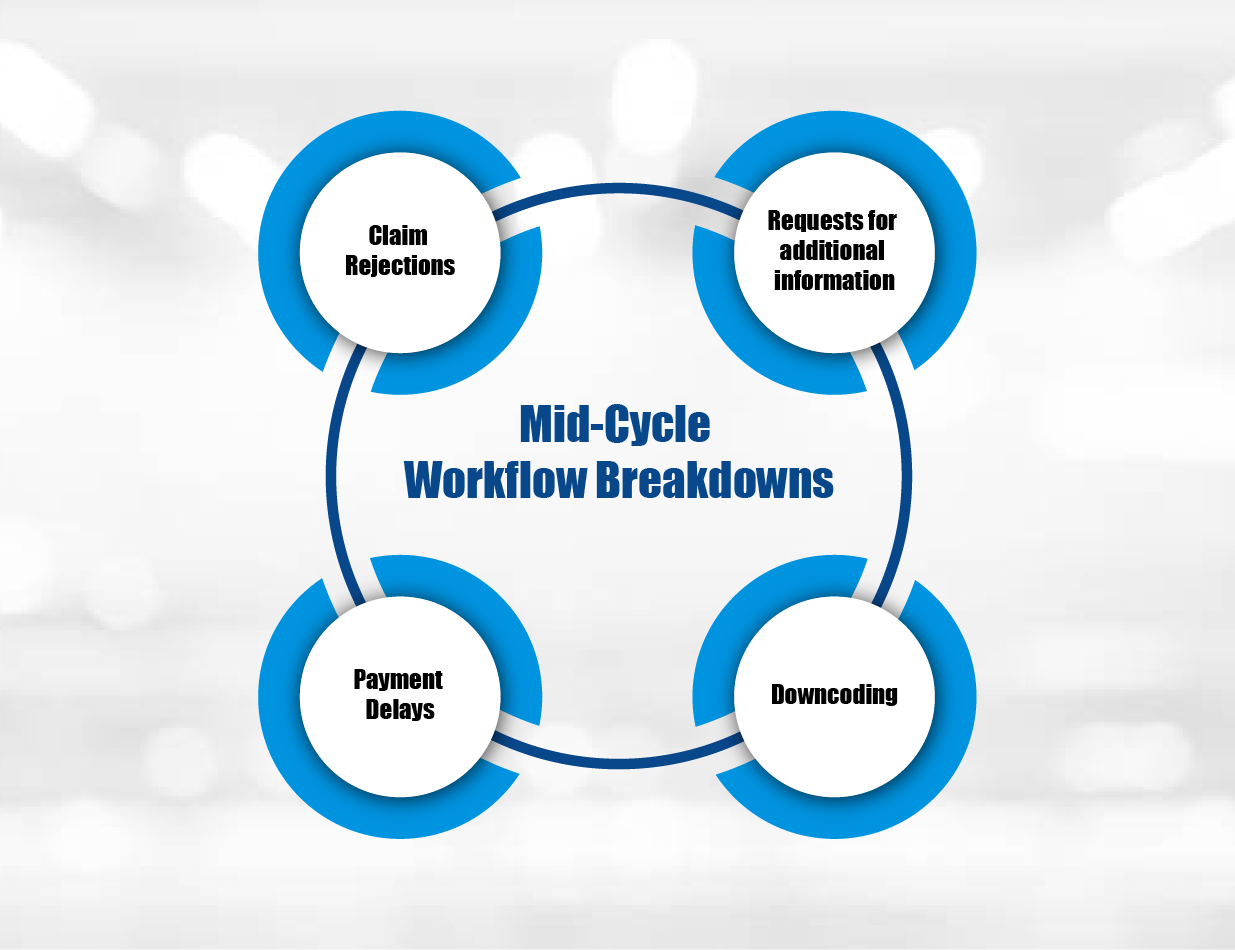
Even minor documentation inconsistencies can trigger payer scrutiny, leading to:
  • Claim rejections
  • Requests for additional information
  • Downcoding
  • Payment delays
For practice managers, these issues often appear as rising AR days without a clear explanation.
A fragmented EHR and billing workflow is frequently the underlying cause. When providers must manually transfer information or rely on disconnected systems, efficiency declines, and errors increase.
Mid-Cycle Workflow Breakdowns That Delay Payments

Back-End Inefficiencies That Inflate AR Days

While front-end and mid-cycle issues initiate revenue disruption, back-end bottlenecks determine how long financial strain persists. Denial management is one of the most critical yet under-optimized components of revenue cycle operations. Many practices lack structured workflows for analyzing denial patterns, prioritizing follow-ups, and resubmitting corrected claims promptly.
Similarly, patient collections are often reactive instead of proactive. Without clear payment policies, automated reminders, and transparent patient portals, balances age unnecessarily.
The following table illustrates common RCM bottlenecks and their financial impact:
RCM Bottleneck Operational Cause Financial Impact
Insurance verification errors
Manual eligibility checks
Increased claim denials
Delayed chart closure
Provider workflow inefficiencies
Slower claim submission
Coding inaccuracies
Lack of coding support
Downcoding or rejections
Poor denial tracking
No structured follow-up system
Increased AR days
Weak patient collections
Limited payment options
Rising patient AR balances
When these inefficiencies stack together, cash flow instability becomes inevitable.

How Operational Gaps Compound Over Time

Revenue cycle bottlenecks rarely cause immediate financial crises. Instead, they create gradual strain.

At first, the effects seem manageable: slightly longer AR days, minor increases in denial, small dips in collection rates. Over time, however, these patterns compound. A few extra days in AR may not seem significant until they become 15 additional days. A slight increase in denial may seem tolerable until it begins to affect net revenue margins.
Practice managers often attempt to resolve symptoms:
  • Hiring additional billing staff
  • Increasing overtime
  • Outsourcing isolated processes
But without addressing systemic workflow inefficiencies, these measures provide only temporary relief. The real issue is rarely staffing volume. It is a workflow structure.

Identifying Revenue Cycle Bottlenecks Before They Escalate

Proactive practices monitor leading indicators, not just lagging ones. Instead of waiting for cash flow shortages, they analyze revenue cycle performance metrics consistently.
Key indicators include:
Metric Warning Sign
Clean Claim Rate
Below industry benchmarks
Days in AR
Gradual upward trend
Denial Rate
Increasing payer-specific patterns
First-Pass Resolution Rate
Declining over time
Patient Collection Rate
Growing outstanding balances
When these indicators shift, they signal operational gaps as well as financial gaps. The challenge for many practices is visibility. Without real-time analytics and centralized reporting, identifying patterns becomes difficult. Data may exist, but it is scattered across multiple systems.
An integrated RCM platform provides transparency, enabling practice managers to detect inefficiencies before they impact liquidity.

How Integrated RCM Technology Eliminates Hidden Gaps

Modern revenue cycle management is no longer just about billing; it is about workflow orchestration. An integrated solution connects front-desk operations, clinical documentation, coding, claims submission, denial management, and patient collections into a unified system.
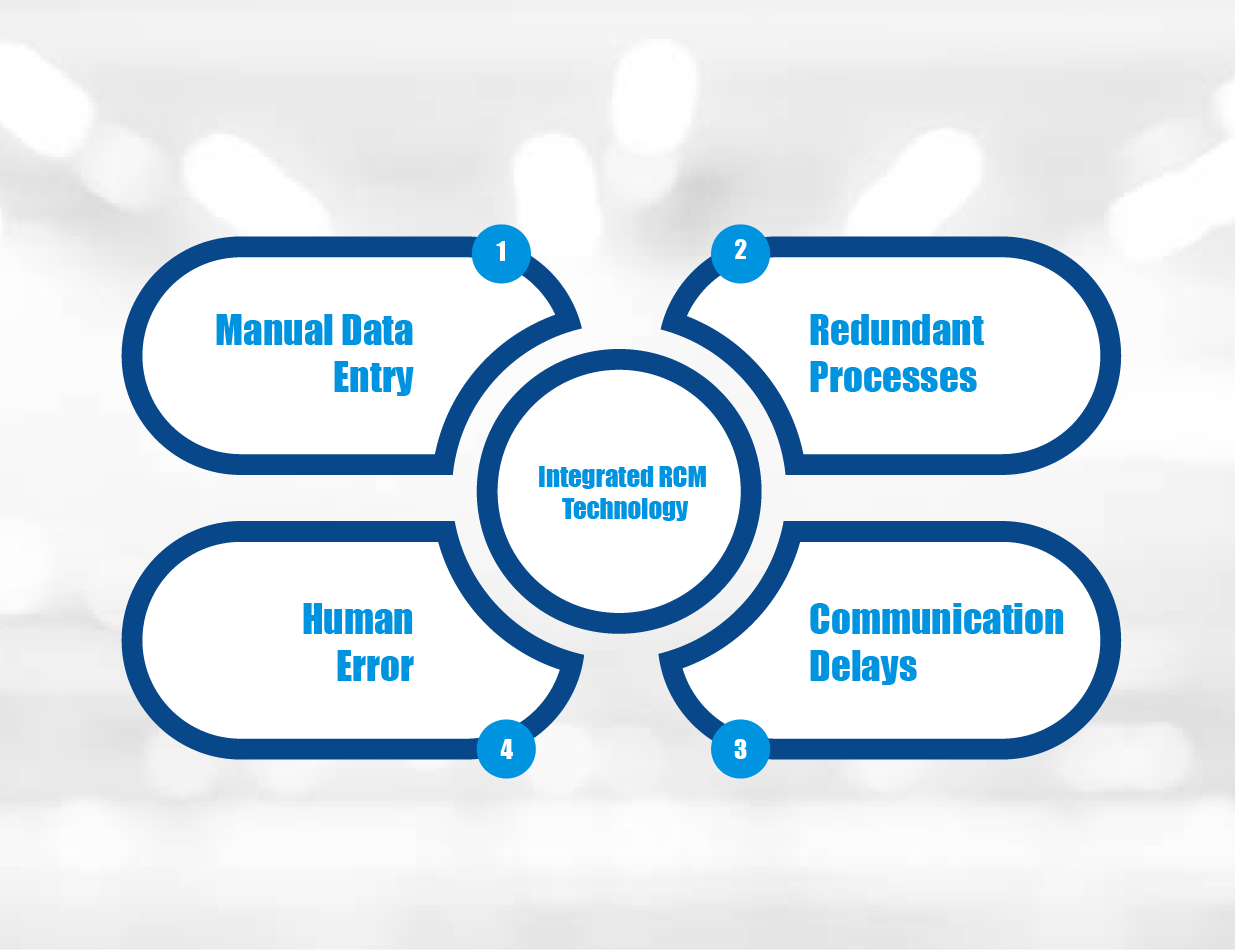
This alignment reduces:
  • Manual data entry
  • Redundant processes
  • Communication delays
  • Human error

Platforms like MaxRemind provide end-to-end visibility across the entire revenue cycle. With solutions such as Maximus EHR, MaxCoder, MaxRPM, and the MaxRemind Provider Portal, practices gain structured workflows that prevent bottlenecks before they form.

Instead of reacting to denials, integrated RCM systems proactively reduce them. Instead of manually tracking AR, automated dashboards highlight aging trends instantly. Instead of fragmented communication, centralized platforms ensure alignment across administrative and clinical teams.

The result is not just faster payments, it is predictable cash flow.
How Integrated RCM Technology Eliminates Hidden Gaps

Final Thoughts: Fix the System, Not Just the Symptoms

Revenue cycle bottlenecks rarely announce themselves loudly. They operate quietly, embedded within routine workflows, slowly eroding financial performance. For practice managers, the temptation is to address surface-level issues: push staff harder, outsource billing, or chase overdue payments more aggressively. But sustainable improvement comes from structural optimization.
When front-end verification is automated, mid-cycle documentation is streamlined, and back-end denial management is proactive, revenue flows more consistently. Cash flow instability is rarely a volume problem. It is usually a workflow problem. If your practice is experiencing rising AR days, increasing denials, or inconsistent collections despite steady patient volume, it may be time to evaluate your revenue cycle infrastructure.
MaxRemind’s integrated RCM ecosystem helps practices eliminate hidden bottlenecks, reduce denials, and improve clean claim rates, before cash flow suffers. Because in today’s healthcare environment, financial stability isn’t just about working harder. It’s about building smarter systems that protect revenue at every stage of the cycle.

Eliminate RCM Bottlenecks Before They Hurt Cash Flow

MaxRemind integrates front-desk, clinical, and billing workflows to prevent revenue leaks. Schedule your free demo and take control of your AR today.
FAQs
What are the most common revenue cycle bottlenecks in medical practices?

The most common RCM bottlenecks include insurance verification errors, delayed chart closures, coding inaccuracies, poor denial management workflows, and weak patient collection processes. These operational gaps often start small but can significantly impact cash flow if left unaddressed.

Why is my practice’s cash flow declining even though patient volume is increasing?

Rising patient volume does not automatically translate into higher revenue. If your revenue cycle workflows are inefficient, such as delayed claim submissions, high denial rates, or inconsistent collections, cash flow can slow down despite steady appointment numbers.

How can I identify hidden operational gaps in my revenue cycle?

Practice managers should monitor key metrics like clean claim rate, days in AR, denial rate, and patient collection rate. Gradual upward trends in AR or denials often signal underlying workflow inefficiencies that require structural improvements.

How do RCM inefficiencies affect accounts receivable (AR) days?

Operational inefficiencies, such as incomplete documentation, claim rejections, or slow denial follow-up, delay reimbursements and extend AR days. Over time, this creates cash flow strain and limits a practice’s ability to reinvest in growth.

How can integrated RCM solutions improve practice cash flow?

Integrated revenue cycle platforms streamline front-end verification, automate claims submission, enhance coding accuracy, and improve denial tracking. Solutions like MaxRemind help practices reduce manual errors, improve clean claim rates, and maintain predictable cash flow through end-to-end visibility and automation.