Cybersecurity in Medical Billing: Protecting Your Revenue and Your Patients Data
As more clinics adopt digital billing systems, cloud platforms, and remote staff workflows, exposure to cyber threats increases. The challenge for medical practices is no longer just filing accurate claims. It now includes defending patient data, ensuring compliance, and keeping billing operations running smoothly in a world where cyberattacks have become routine.
Why Cybersecurity Matters in Medical Billing
Cybersecurity in medical billing is about more than keeping hackers out. It protects patient trust, shields clinics from legal and financial damage, and ensures that billing activities continue without interruption.
-
Patient Safety & Trust:
PHI mishandling puts individuals’ identities, medical histories, and financial accounts at risk. -
Operational Continuity:
Cyberattacks can halt claim submission and reimbursement, immediately impacting cash flow. -
Regulatory Compliance:
Providers are legally required to safeguard PHI under HIPAA and other frameworks.
READ MORE: Top 10 Medical Billing Companies in the USA

The Rising Cyber Threat Landscape
| Trend Driving Risk | Impact on Clinics |
|---|---|
|
Digitization of billing & records |
More systems to secure, more attack vectors |
|
Ransomware-as-a-service |
Cybercrime is available to non-technical criminals |
|
Increased remote workforces |
Home networks introduce weak security |
|
Legacy billing systems in practices |
Outdated or unpatched software |
|
Limited IT budgets |
Less cybersecurity investment than in hospitals |
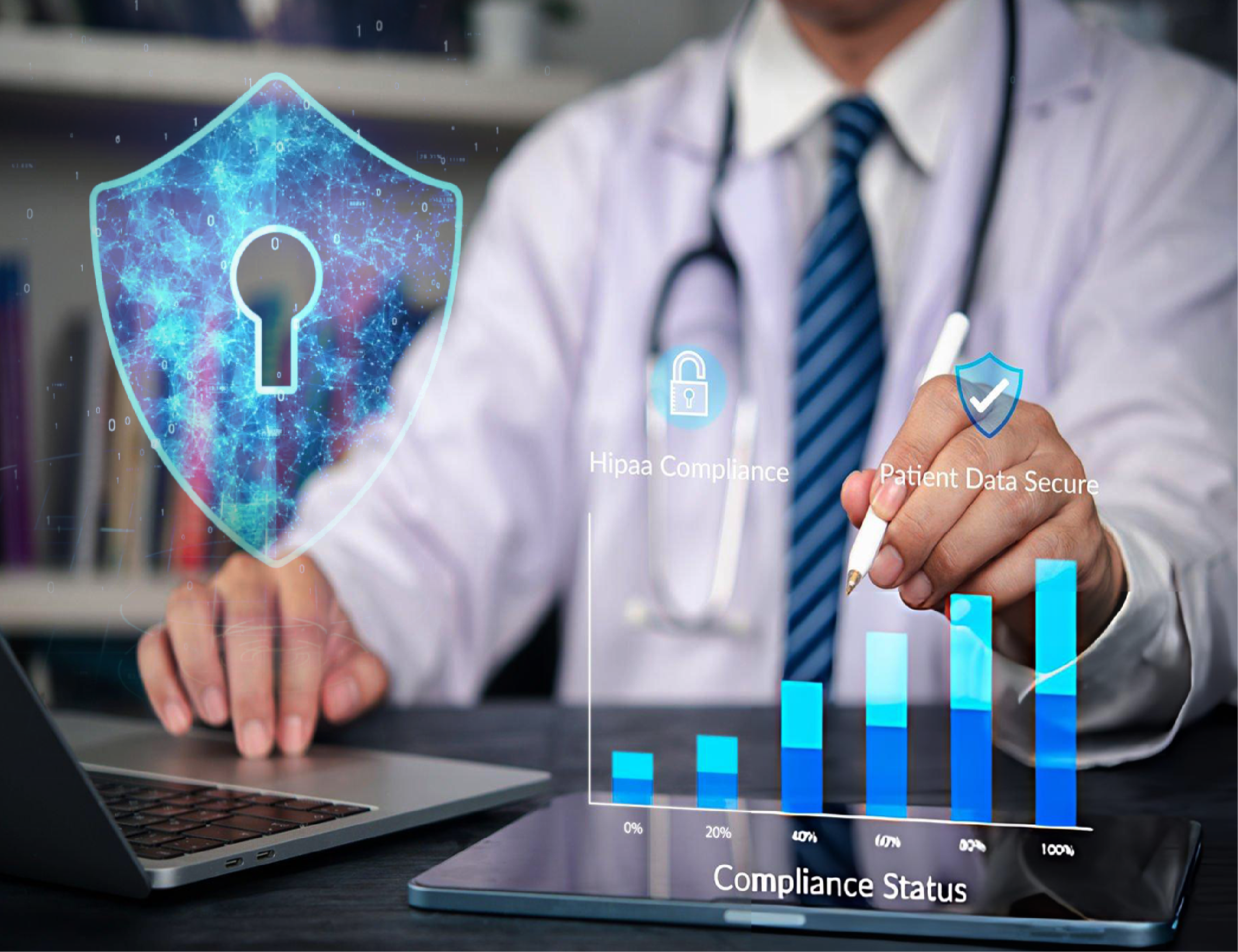
HIPAA Compliance and Legal Exposure
- Storage
- Access control
- Transmission
- Disposal
- Vendor sharing and outsourcing
HIPAA Penalty Tiers
| Severity Tier | Penalty Range | Example |
|---|---|---|
|
Tier 1 |
$100 – $50,000 per violation |
Unintentional breach; the organization tried to comply |
|
Tier 2 |
Up to $100,000 per violation |
Reasonable diligence was not followed |
|
Tier 3 |
Up to $250,000 per violation |
Known violation not corrected quickly |
|
Tier 4 |
$1.5M+ + possible criminal charges |
Willful neglect without remediation |
How Data Breaches Disrupt Revenue Cycle Management
- Eligibility verification
- Charge capture
- Coding
- Claim submission
- Payment posting
- Denial management
- Missed claims deadlines
- Rejected claims due to missing records
- Delayed reimbursement cycles
- Manual rework that doubles the administrative burden
- Months of operational and financial recovery
The ripple effect is clear: a cybersecurity failure is a revenue issue, not just a technical inconvenience.
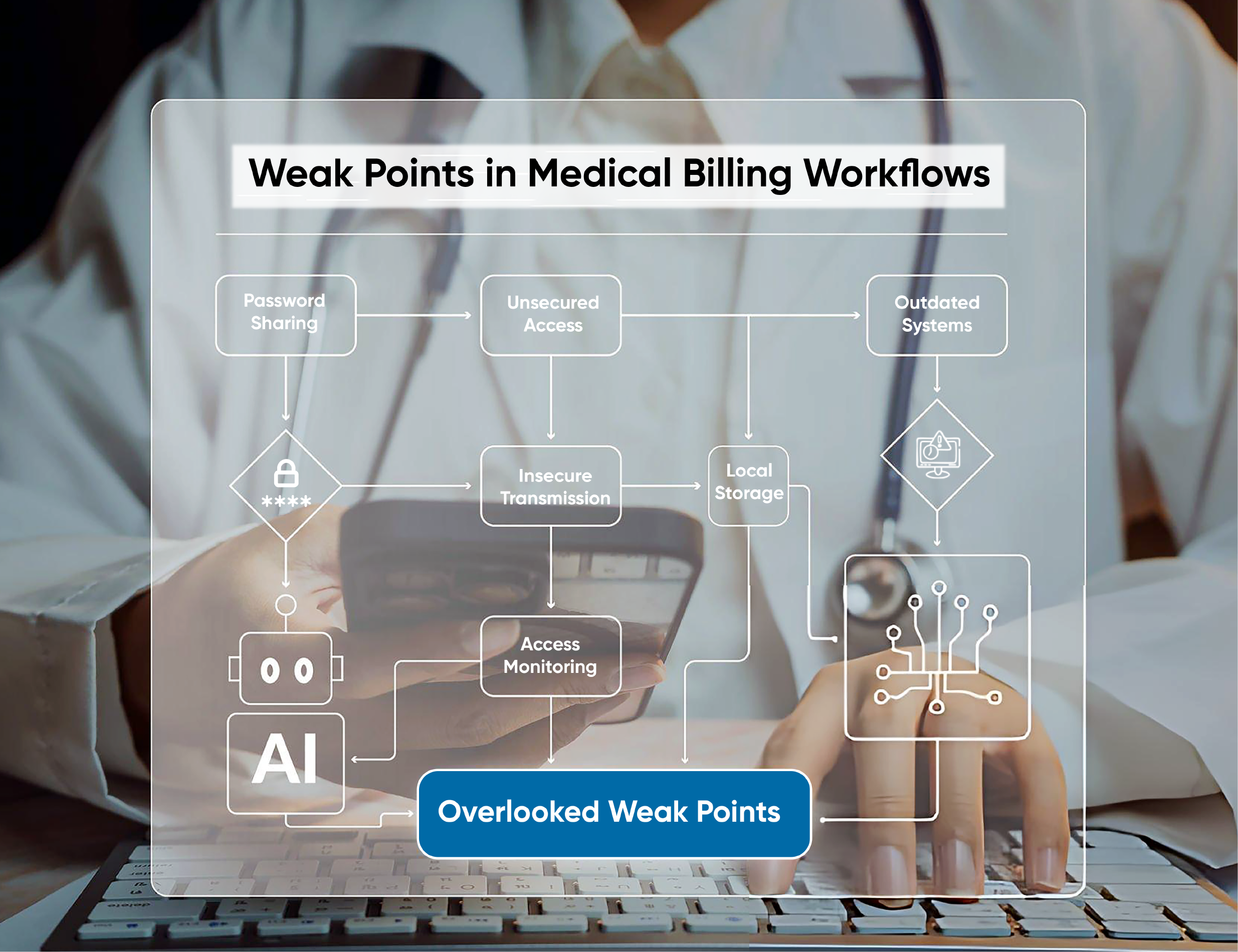
Weak Points Inside Medical Billing Workflows
Breaches are not always caused by sophisticated hacking. More often, vulnerabilities stem from everyday operational habits.
- Reusing or sharing passwords among billing staff
- Staff accessing systems from personal devices or public Wi-Fi
- Billing software is not updated or patched regularly
- PHI being transferred by email or unsecured messaging
- Remote employees printing or storing local copies of patient data
- Lack of monitoring for who enters patient accounts and why
Best Practices to Strengthen Billing Security
- How to recognize phishing scams
- How to handle suspicious login attempts
- What data should never be downloaded, shared, or printed
- Role-based permission ensures only authorized team members have access to patient data.
- Password rotation policies prevent account takeover.
- Audit trails show who changed or accessed records.
- Incident response plans ensure rapid action when breaches occur.
- Multi-factor authentication
- Encrypted storage and secure cloud infrastructure
- Automatic system backups
- Continuous software patching
- Threat monitoring and alerting
How Technology and Trusted Partners Reduce Cyber Risk
- Uses hardened and HIPAA-compliant billing systems
- Maintains secure, encrypted cloud environments
- Restricts and monitors data access
- Keeps software patched and updated
- Trains billing teams in compliance expectations
- Ensures redundant backups and continuity planning
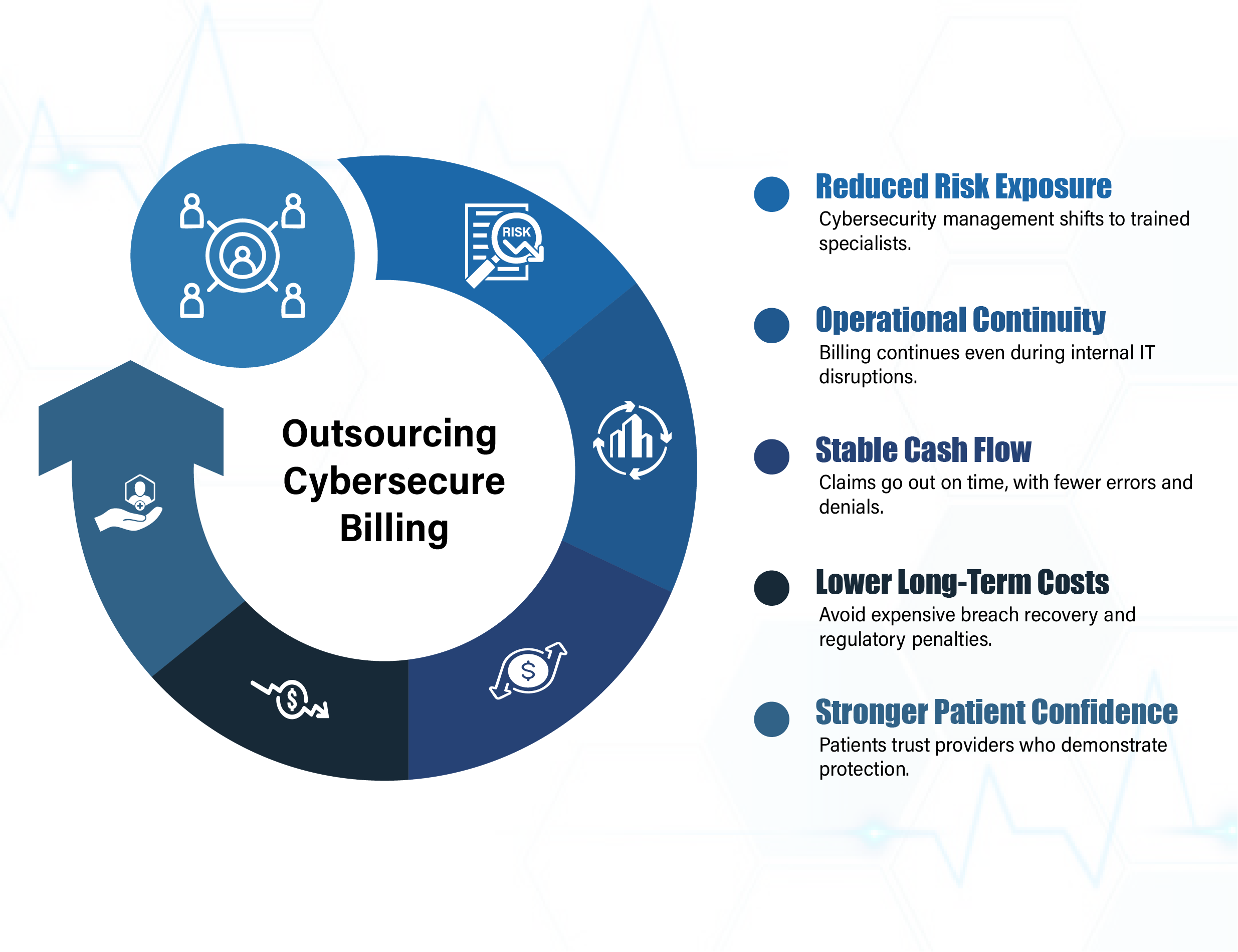
Why Outsourcing Cybersecure Billing Makes Business Sense
-
Reduced Risk Exposure:
Cybersecurity management shifts to trained specialists. -
Operational Continuity:
Billing continues even during internal IT disruptions. -
Stable Cash Flow:
Claims go out on time, with fewer errors and denials. -
Lower Long-Term Costs:
Avoid expensive breach recovery and regulatory penalties. -
Stronger Patient Confidence:
Patients trust providers who demonstrate protection.
Conclusion
Medical billing sits at the intersection of financial responsibility and patient care, making cybersecurity a non-negotiable priority. Protecting PHI isn’t just a regulatory requirement – it is a commitment to patient dignity, organizational stability, and operational excellence.
Practices that invest early in secure workflows, trained staff, and proven systems reduce risk, stay compliant, and protect revenue even as cyber threats increase.
If your practice is ready to:
- Strengthen its cybersecurity posture
- Reduce compliance worries
- Maintain uninterrupted cash flow
- Protect patient data with confidence
MaxRemind is ready to help.
- Why is cybersecurity so important in medical billing?
-
Cybersecurity protects sensitive patient data, prevents identity theft, and ensures that revenue workflows continue without disruption. A cyberattack can halt claim submission, delay payments, and expose practices to lawsuits and HIPAA fines, making cybersecurity a critical financial and compliance priority.
- What types of cyberattacks target healthcare billing systems the most?
-
The most common attacks include ransomware, phishing scams, data theft, credential hacking, and insider misuse. Because billing systems store both medical and financial information, criminals view them as high-value targets.
- How does a cybersecurity breach affect revenue cycle management?
-
A breach can interrupt every stage of billing – from eligibility checks and coding to claims submission and reimbursement. Practices may miss deadlines, lose access to records, or spend weeks rebuilding or recovering data. The result is delayed revenue, increased denials, and major operational strain.
- What steps can a practice take to improve billing security immediately?
-
A few quick wins include enabling multi-factor authentication, updating billing software, implementing role-based access limits, training staff on phishing and security risks, and enforcing strong password rules. Regular audits and cloud-based secure billing platforms provide additional long-term protection.
- Is outsourcing medical billing safer than handling it in-house?
-
In many cases, yes. A qualified RCM partner offers secure cloud infrastructure, HIPAA-compliant workflows, restricted access controls, continuous monitoring, and trained billing professionals. Outsourcing shifts cybersecurity responsibility from the practice to specialists, significantly reducing exposure and ensuring operational continuity.