2026 Will Be the Year of Intelligent EHRs: 7 AI Advancements That Will Reshape US Healthcare
Maximus EHR, developed by MaxRemind, stands out as one of the leading platforms driving this AI revolution forward. Maximus EHR already offers features like OCR, predictive analysis, automated coding, voice-enabled documentation, intelligent alerts, and smart workflows. In simple terms, it’s delivering today what many competitors are still hoping to achieve by 2026.
AI-Powered Clinical Documentation & Voice-Enabled EHR
One of the biggest challenges US providers face is documentation burden. Physicians still spend more time typing than treating patients. By 2026, the shift to voice-enabled, AI-powered documentation will become standard.
How AI Will Transform Documentation
- Real-time voice dictation will allow providers to speak naturally while the system captures their notes instantly.
- AI will automatically transcribe clinical notes without the need for manual typing.
- NLP-based summarization will extract key details and shorten long conversations into clear, concise notes.
- AI will generate structured data by placing the correct information into the appropriate EHR fields automatically.
- These capabilities will help providers complete charts much faster.
- Overall, AI will greatly reduce the amount of manual typing and clicking required in everyday documentation.
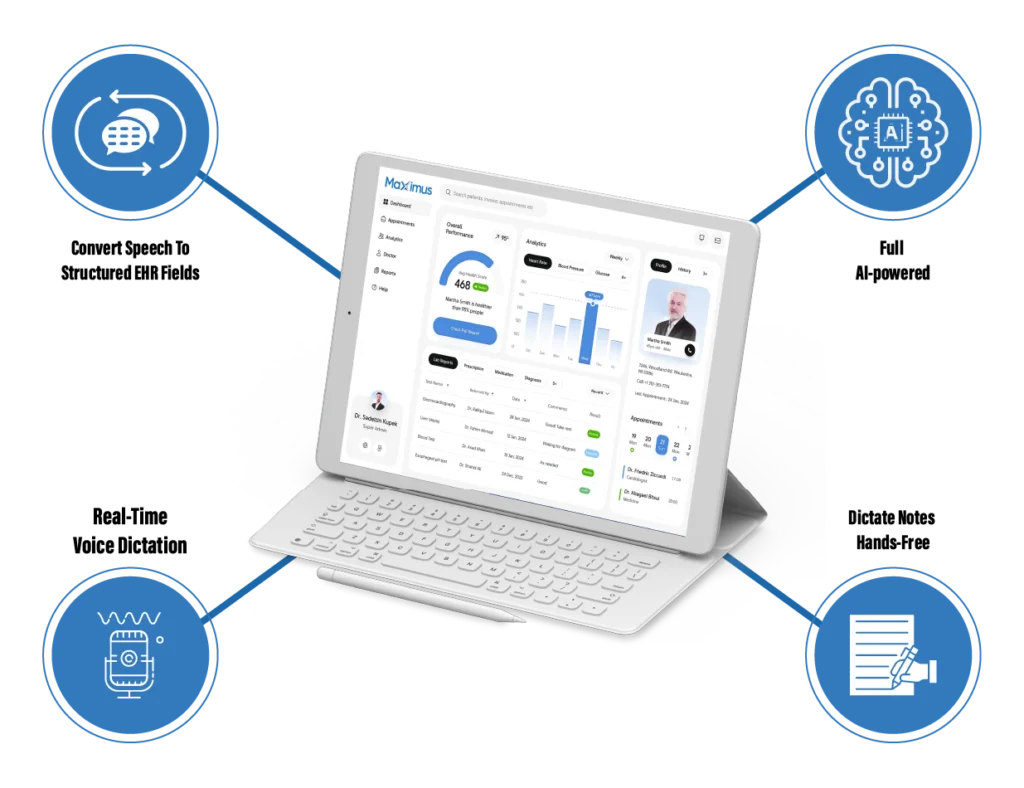
How Maximus EHR Delivers This Today
- Dictate notes hands-free
- Convert speech to structured EHR fields
- Auto-populate medical histories, symptoms, assessments, and plans
- Reduce charting time significantly
OCR-Enabled Data Capture and Seamless Record Digitization
Why OCR Matters
- OCR converts paper documents into searchable digital records, making information easy to find.
- It eliminates the need for manual data entry, saving time and reducing effort.
- OCR minimizes clerical errors by accurately capturing information from documents.
- It ensures precise indexing and filing, keeping records organized and accessible.
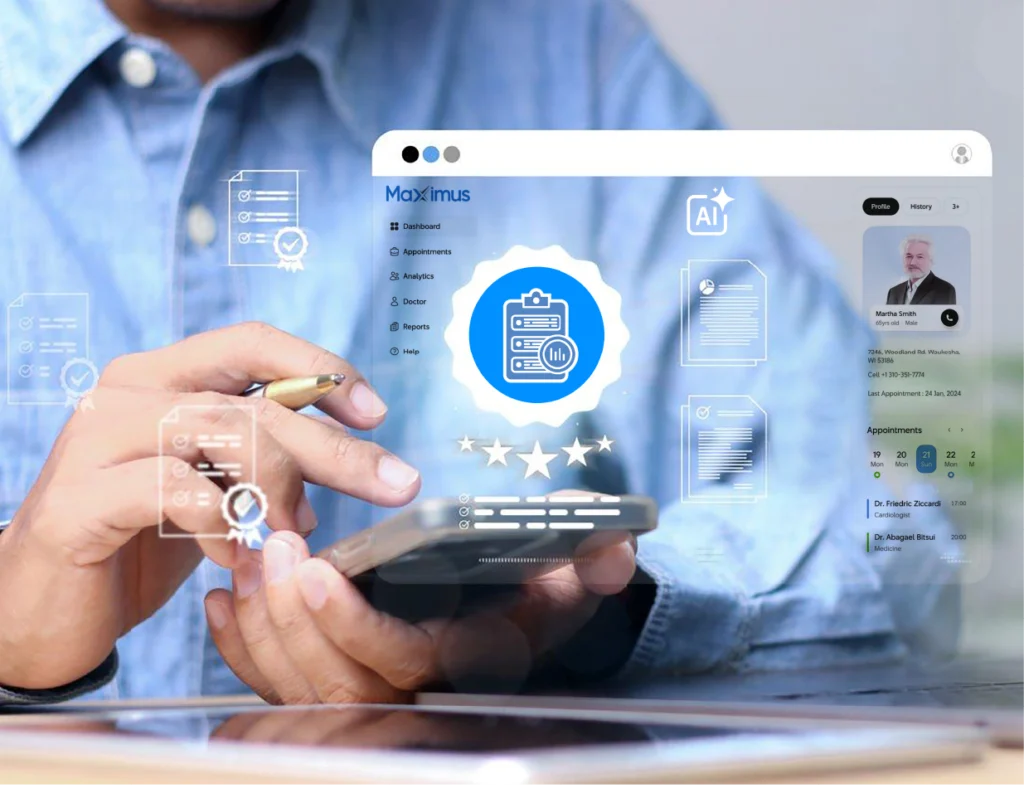
Maximus EHR’s AI-Driven OCR Advantage
- Scan patient forms, lab results, referrals, and handwritten notes
- Convert them into structured EHR data
- Auto-categorize files with intelligent tagging
- Instantly store records for provider access
Predictive Analytics for Proactive & Data-Driven Care
What Predictive Analytics Will Enable
- Predictive analytics will enable early detection of risk factors in patients, allowing for proactive care.
- It will help predict clinical deterioration before it becomes critical, improving patient outcomes.
- AI can identify care gaps, ensuring patients receive timely screenings and interventions.
- Predictive analytics will provide personalized care recommendations based on individual patient data.
- It will also deliver population health insights, helping healthcare providers manage groups of patients more effectively.
Maximus EHR uses machine learning models to:
- Predict missed appointments
- Flag high-risk patients
- Provide early alerts for chronic disease progression
- Suggest personalized treatment paths
- Highlight compliance risks
Automated Medical Coding & AI-Supported RCM
AI Will Revolutionize Medical Coding
- AI will auto-suggest CPT and ICD-10 codes, making coding faster and more accurate.
- It will provide real-time coding validation to ensure all entries meet compliance standards.
- AI can automatically detect errors, reducing mistakes that lead to claim denials.
- These tools will boost claim acceptance rates by improving coding accuracy.
- AI-driven coding integrates seamlessly with billing workflows, streamlining the revenue cycle process.
How Maximus EHR Leads the Way
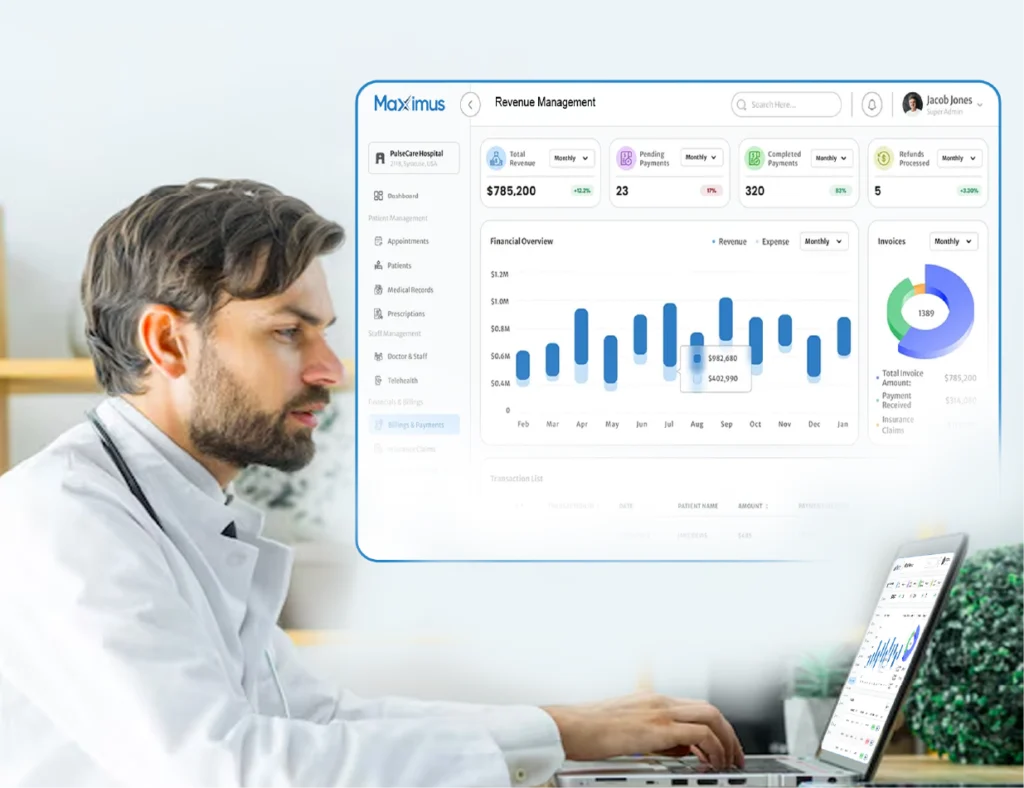
- AI-assisted coding
- Real-time claim scrubbing
- Automated medical necessity checks
- Built-in compliance rules
AI-Powered Clinical Decision Support (CDS)
Future-Ready AI Clinical Decision Support Will Include
- AI will provide alerts for drug interactions, helping clinicians prevent potential medication errors.
- It will offer recommendations based on a patient’s medical history, supporting informed decision-making.
- AI-generated treatment guidance will assist providers in choosing the most effective care plans.
- Intelligent reminders for preventive care will ensure patients receive timely screenings and interventions.
- AI will also deliver population-based care guidelines, helping healthcare teams manage patient groups efficiently.
Maximus EHR’s CDS Capabilities
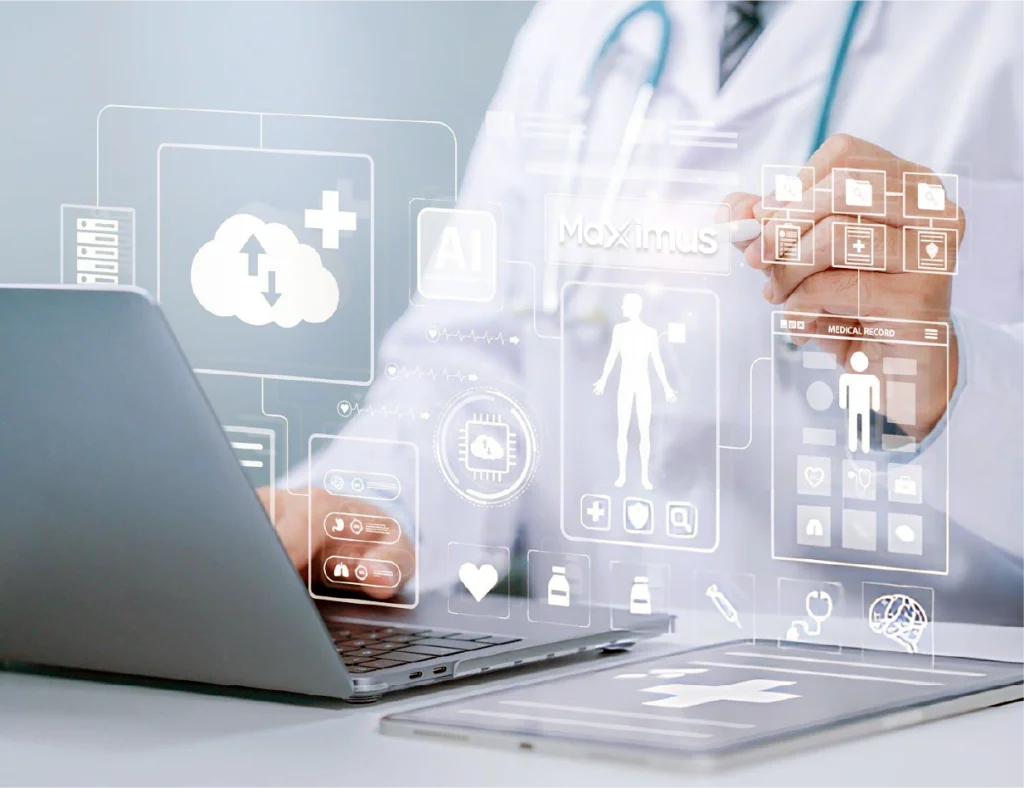
- Early warnings
- Safety alerts
- Evidence-based guidance
- Automated reminders for screening and follow-ups
This reduces the cognitive load on providers and improves patient safety—one of the biggest priorities in US healthcare.
Smart & Automated Workflows That Reduce Administrative Burden
Workflow automation will be a defining feature of intelligent EHRs in 2026.
AI Will Automate Tasks Such As:
- AI will automate eligibility verification, ensuring patients are correctly screened before services are provided.
- It will handle appointment scheduling, reducing administrative workload and minimizing scheduling errors.
- AI can send follow-up reminders to patients, improving compliance and continuity of care.
- Lab ordering processes will be streamlined through AI, making requests faster and more accurate.
- Prior authorization workflows will be managed automatically, saving time and reducing delays.
- AI will facilitate patient communication, sending notifications and updates efficiently.
Maximus EHR Already Automates These Processes
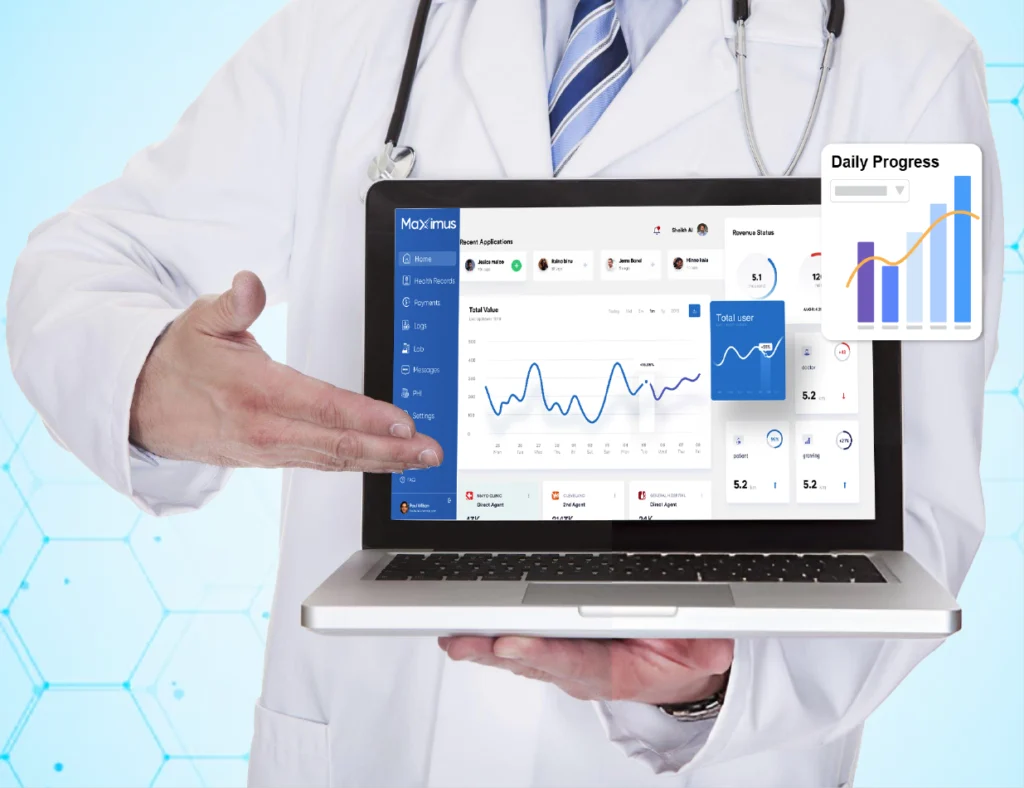
- Auto-schedule patient recalls
- Send appointment confirmations
- Trigger clinical reminders
- Manage task assignments
- Provide automated data routing
Intelligent Patient Experience & AI-Powered Engagement
Patient expectations in the US are rising. By 2026, healthcare technology will need to be deeply personalized, intelligent, and accessible.
How AI Will Transform Patient Experience
- AI will enable smart patient portals, giving patients easy access to their health information.
- It will send AI-driven reminders to ensure patients stay on track with appointments and treatments.
- Proactive care management will help identify patient needs before issues become serious.
- Chatbots will handle basic patient queries, providing instant support and information.
- Digital check-ins will streamline the registration process and reduce wait times.
- AI will deliver personalized care instructions, tailored to each patient’s unique health needs.
Maximus EHR Leads the Patient Experience Revolution
- AI-based recall and reminder systems
- Real-time notifications
- Easy telehealth integrations
- Patient-friendly digital forms
- Self-service portals
Why 2026 Will Be the Turning Point for EHR Intelligence
The transition from traditional EHRs to intelligent, AI-driven systems is inevitable for several reasons:
- Rising administrative workloads are putting pressure on healthcare staff and slowing down clinical operations.
- Physician burnout is increasing due to long hours and excessive documentation requirements.
- Patient expectations are growing, with a demand for faster, more personalized care.
- Healthcare providers face complex compliance regulations that require careful attention and resources.
- Revenue cycle management (RCM) challenges continue to impact financial performance and efficiency.
- There is a growing need for interoperability to ensure seamless data sharing across systems.
- Healthcare organizations are demanding real-time insights to make faster, more informed decisions.
US healthcare practices will no longer tolerate slow systems, manual workflows, or documentation-heavy EHRs.
By 2026, the industry will demand:
- Less typing
- More automation
- Faster decision-making
- Better patient outcomes
- Integrated billing support
- Secure, accurate, & future-ready data
Maximus EHR is already built around these needs – making it a future-proof choice for clinics and practices of all sizes.
Why Maximus EHR Is Leading the Future of Intelligent EHR Systems
-
Clinical Documentation
Voice-enabled notes and NLP automation -
OCR Scanning and Data Capture
Eliminating manual entry and digitizing records instantly -
Predictive Analytics
Real-time insights for risk, care gaps, and outcomes -
AI Medical Coding & Billing
Reducing denials and improving revenue integrity -
Automated Workflows
Saving time for both providers and staff -
Clinical Decision Support
Smart alerts and treatment guidance -
Enhanced Patient Engagement
Intelligent reminders and digital tools